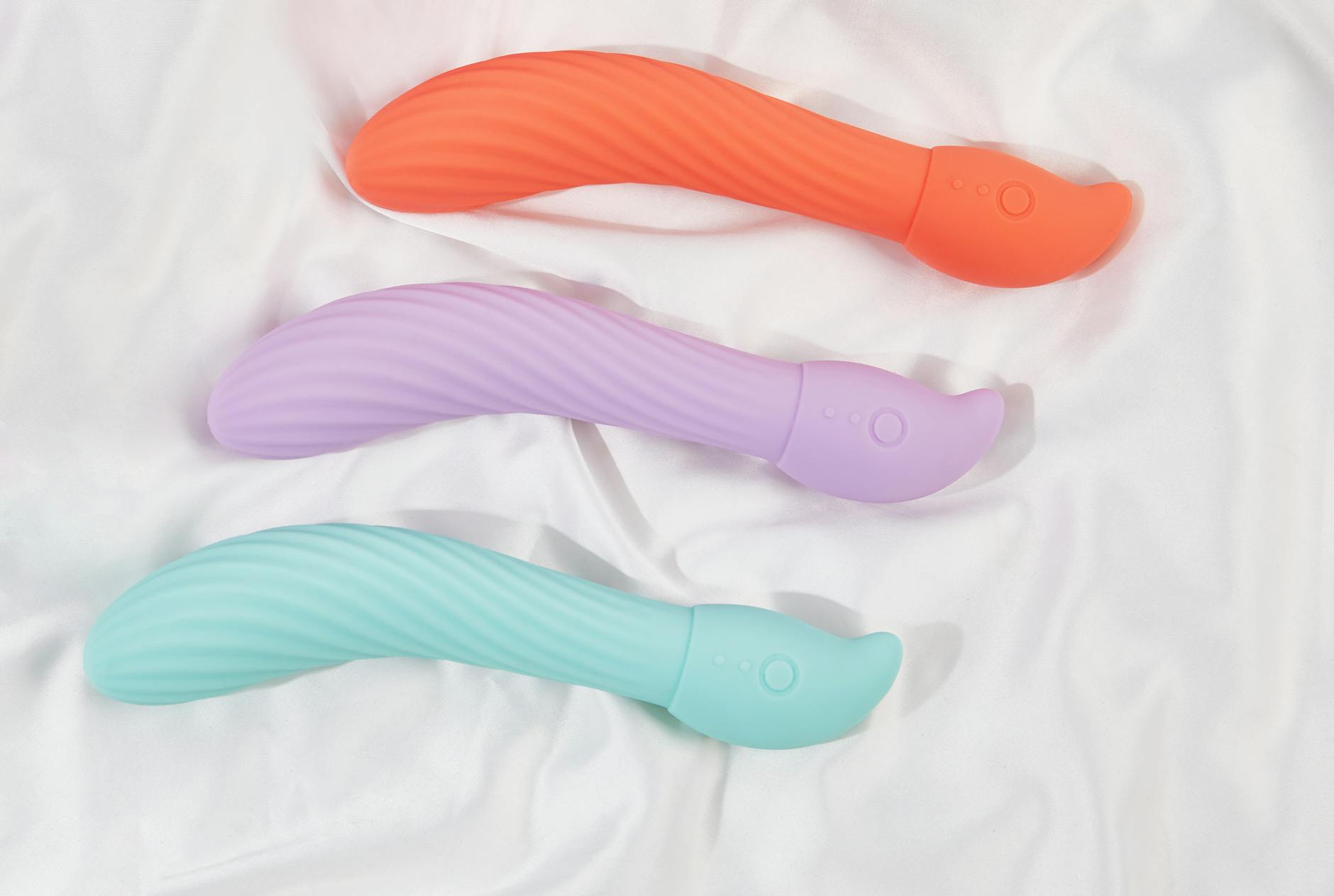
Let's name the thing nobody talks about
Antidepressants save lives. They also sometimes flatten your ability to feel pleasure. Not metaphorically. Physiologically. Between 40 and 65 percent of people taking SSRIs and SNRIs report diminished sensation, delayed or absent orgasm, or reduced desire. This is not weakness. This is not "it's all in your head." This is a documented side effect that deserves a practical solution, not shame.
The good news: lemon vibrators and clitoral vibrators designed with suction technology work differently than vibration alone. They can help you reclaim sensation when antidepressants have turned down the dial. Here's how.
Why antidepressants change sensation in the first place
SSRIs (selective serotonin reuptake inhibitors) like sertraline or paroxetine slow the reabsorption of serotonin in your brain. More serotonin circulating sounds good until you realize that serotonin also regulates arousal, genital blood flow, and the sensitivity of your sexual nerve endings. Higher serotonin can mean lower sexual sensation. It's a trade-off your brain is making to stabilize your mood.
SNRIs add norepinephrine into the mix, which affects both arousal and orgasmic response. Some people feel nothing. Others feel like they're experiencing pleasure through a thick glass wall. Recognition matters here. If you're on an antidepressant that's working for your mental health, you don't want to stop taking it. You want to work around this side effect.
That's where the design of lemon clitoral vibrators actually matters.
How suction works differently than vibration
Most vibrators shake. The Lem and similar lemon-shaped clitoral vibrators use air-suction technology. Instead of creating friction through rapid movement, they create a gentle vacuum that draws the clitoris upward and engages a broader area of nerve endings.
Here's why this matters when sensation is already dampened. Suction stimulation activates different neural pathways than vibration. If your antidepressant is numbing the fine-touch sensation in your clitoris, suction bypasses some of that by working on pressure and tissue movement instead. It's not magic, but it's a different sensory channel.
Vibration also tends to fatigue nerve endings faster. When you're already working against dulled sensation, you don't want a tool that numbs you further. Suction is gentler on overused neural pathways and often feels less tiring.
Start with intensity patterns, not speed
If you've been using traditional vibrators with minimal result, the instinct is usually to crank the power higher. That backfires when antidepressants are involved. Higher intensity often just creates pressure fatigue without actual pleasure.
With the Lem vibrator or a similar lemon adult toy, the patterns matter more than raw power. Most suction devices have multiple pulse rhythms. Start with Pattern 1 or 2. Let it build slowly. Give yourself 20 to 30 minutes, not five.
Antidepressants don't just reduce peak sensation. They also slow the arc of arousal. Your body takes longer to warm up, longer to cross the threshold into pleasure, and longer to reach orgasm. Budget that time. Rushing works against you.
Add moisture and patience to the equation
When sensation is already compromised, dryness makes it worse. Water-based lubricant isn't optional here. It's part of the technology. Lube increases contact consistency and reduces friction fatigue, which means your nerve endings have to work less hard to register sensation.
Apply lube generously around the clitoris and on the device. Reapply every 10 minutes or so if things are getting dry. This isn't about the erotic experience. This is about removing obstacles to sensation.
Patience is the other half. Many people who've been on antidepressants for months or years have unconsciously stopped expecting pleasure from their body. You're not just rebuilding sensation. You're rebuilding the mental permission to chase it. That takes deliberate practice.
The role of mental foreplay and expectation
Antidepressants don't just affect your body. They affect your brain's reward prediction. If you've had months of difficulty reaching orgasm, your brain has learned not to expect it. That learned expectation is half the problem.
This is where your environment and mindset matter as much as the tool. Create a space where you feel safe and unrushed. Use the Lem vibrator or your preferred lemon clitoral vibrator in a context where there's zero pressure to "perform" or reach an endpoint. Solo exploration is often easier here than partnered sex, precisely because you remove the other person's expectations.
Read something that gets you interested. Watch something. Let your brain catch up to your body's sensations. Antidepressants slow this process, but they don't stop it.
When to talk to your doctor about medication timing or switching
Some people find that taking their SSRI or SNRI at a different time of day creates a small window of higher sensation. Others find that a lower dose, if medically safe, helps. Some switch to antidepressants with a lower sexual side-effect profile, like bupropion or mirtazapine.
None of these are decisions to make alone. Talk to the doctor prescribing your antidepressant. Be specific about the symptom. "I have no sensation" gets a different response than "I'm having less orgasms." Your prescriber may have options you don't know exist.
If medication adjustment isn't possible or doesn't help enough, tools like the Lem vibrator become your main workaround. They're not a replacement for medical conversation, but they're a legitimate part of the solution.
What doesn't work (and why you can stop trying)
Higher voltage vibrators won't fix this. Your nerve endings aren't lazy. They're genuinely less responsive. More power just creates fatigue.
Waiting for sensation to return on its own usually doesn't work. If you've been on an antidepressant for more than a few months, your body has adapted. You need active tools and deliberate practice to rebuild sensation, not passive waiting.
Switching to a partner in hopes that novelty will spark sensation sometimes helps, but often doesn't. The physiological dampening is still there. What changes is context and permission, not sensation itself. Solo exploration with a lemon vibrator gives you more control over that context.
Blaming yourself won't help either. This is your brain chemistry responding to a medication that's keeping you stable. That's not a personal failure.
Building a sustainable pleasure practice despite antidepressants
Start small. 15 minutes, once or twice a week. Use a device designed for reduced-sensation scenarios, like a suction-based lemon clitoral vibrator. Build the habit of exploring your body without outcome pressure.
Track what works. Does Pattern 2 feel better than Pattern 1? Does it help to have music playing? Does a particular time of day feel easier? Your nervous system under antidepressants has its own rhythm. Finding that rhythm matters.
Consider partnered exploration separately from solo exploration. These are different conversations with different bodies and dynamics. Solo practice with a Lem vibrator or similar tool helps you rebuild your own sensation map first. That clarity makes partnered sex easier later.
Consider <a href="/blog/how-to-use-lemon-vibrators-when-you-have-anxiety-or-overthinking">managing overthinking and anxiety</a> as part of this process. Antidepressants work partly by dampening arousal systems and partly by settling overactive threat detection. Your brain might still be in protective mode around pleasure. Gentle, repeated exposure in a safe context rewires that.
If you've been <a href="/blog/how-to-use-lemon-vibrators-for-clitoral-overstimulation-recovery">experiencing overstimulation</a> in the past, this is actually your chance to rebuild from a gentler baseline. Suction devices let you control intensity in ways that high-power vibrators don't.
The bigger picture: pleasure matters, even on antidepressants
Your mental health is non-negotiable. If your antidepressant is keeping you stable, that's the right choice. But pleasure is also part of your health. It's not a luxury or a nice-to-have. It's a signal that your nervous system is functioning, that you have agency over your body, and that life has texture beyond just managing symptoms.
Lemon vibrators and clitoral vibrators with suction technology exist partly because people on antidepressants deserve access to pleasure that works with their body's actual capabilities, not against them. Using them isn't settling. It's being strategic.
Your sensation will likely improve slightly over time if you keep practicing. Some people find that after several months of regular exploration, even antidepressant-dulled pleasure starts to feel richer. Not the same as before. Different. But real.
People also ask
Can switching antidepressants improve sexual sensation?
Sometimes, yes. Bupropion and mirtazapine have lower rates of sexual side effects than SSRIs and SNRIs. Agomelatine (marketed as Valdoxan) may also be gentler. But switching medications is a medical decision that depends on whether your current antidepressant is working well for your mood. Talk to your prescriber about whether a switch is safe and advisable for you. If it is possible, the process usually takes several weeks to titrate off one and onto another, so results aren't immediate.
How long does it take to rebuild sensation after antidepressants?
It depends on how long you've been on the medication and how severely sensation is dampened. Some people notice improvement within 3 to 4 weeks of regular exploration with a device like the Lem vibrator. Others take 2 to 3 months. Your brain is learning new arousal pathways, so consistency matters more than intensity. Weekly sessions don't work as well as multiple times per week.
Can you use a lemon vibrator if you're having absolutely no sensation?
Yes, actually. Complete numbness is rare, but dulled sensation is very common on antidepressants. Even if you're not feeling much, the suction mechanism is working on your tissue and nerve endings. Over time, as you practice, sensation typically improves. It's similar to physical therapy for an injured muscle. You start where you are, not where you wish you were.
Is it normal to need more time to orgasm on antidepressants?
Completely normal. Delayed orgasm affects roughly 40 percent of people on SSRIs and similar medications. Your nervous system is genuinely slower to reach that threshold. This isn't laziness or lack of desire. It's a pharmacological effect. The Lem vibrator and similar lemon clitoral vibrators can help speed the process slightly by engaging broader sensory pathways, but you'll likely always need a bit more time than you did before the medication.
Should I tell my partner about sensation changes from antidepressants?
Yes. Many partners assume reduced sensation means reduced desire or attraction. It doesn't. It's a medical side effect. Having the conversation upfront prevents hurt feelings and resentment. You might say something like, "My antidepressant means my body takes longer to warm up and feel sensation. That doesn't mean I don't want to be close to you. It means we need to adjust expectations and timing." Clear communication makes partnered sex work better in this situation.
Can combining a lemon vibrator with other techniques help more?
Yes. Manual stimulation combined with the Lem vibrator, adding lube, extended foreplay, mental arousal through reading or other content, and a longer overall session all work together. You're not choosing between these options. You're stacking them. The more sensory input you're creating, the more likely your dampened nerve endings will register something.
What comes next
Your antidepressant is keeping you stable. That's the win. Rebuilding pleasure alongside that stability is the next win, and it's absolutely possible. A tool like the Lem vibrator isn't a workaround or a compromise. It's a legitimate technology designed for bodies that need something different. Use it with patience, consistency, and the knowledge that sensation rebuilds slowly but it does rebuild.
If you have questions about what device might work best for your specific situation or body, <a href="/contact">reach out</a>. We're here to help you find the right tool for where you actually are, not where you think you should be.