Let's start with the honest part
Most couples have this conversation buried somewhere between awkwardness and frustration. One partner settles into a rhythm they love. The other person is either gripping the sheets or mentally checking email. Nobody wants to say it out loud, so you both keep going, and gradually sex becomes less frequent because it's just not quite landing for someone.
Here's the thing: intensity preference isn't a sign of mismatch or incompatibility. It's just information. And lemon vibrators, because they give you tactile feedback and real control, actually make this problem easier to solve than you'd think.
Why intensity preferences matter (and differ so much)
The nervous system doesn't read from a script. Two people can be equally aroused, equally attracted, equally invested in each other, and still need wildly different sensations to orgasm.
Some of it is physiological. Nerve density varies. Hormonal cycles change sensitivity. Age and medication affect how quickly the body responds. Some of it is psychological. Anxiety makes some people need more intensity to tune out distraction. For others, gentleness actually helps them focus. Some people grew up thinking rougher sensation meant "really hot." Others learned the opposite. There's no universal calibration.
And then there's the simple fact that the same person can want different intensities on different nights depending on stress, energy, how long it's been, what else is happening in the relationship.
The problem with pretending compatibility
Most couples try one of two things when intensity doesn't match. They either settle on a middle ground that partially satisfies nobody, or they split the difference by using toys separately. Both are fine. Neither is ideal because they both involve some degree of compromise or disconnection.
What I see in my practice is that couples who actually address this directly, without shame, often find it's one of the easiest things to troubleshoot. You're not fixing a broken relationship. You're just making the existing one work better.
How lemon vibrators solve this specific problem
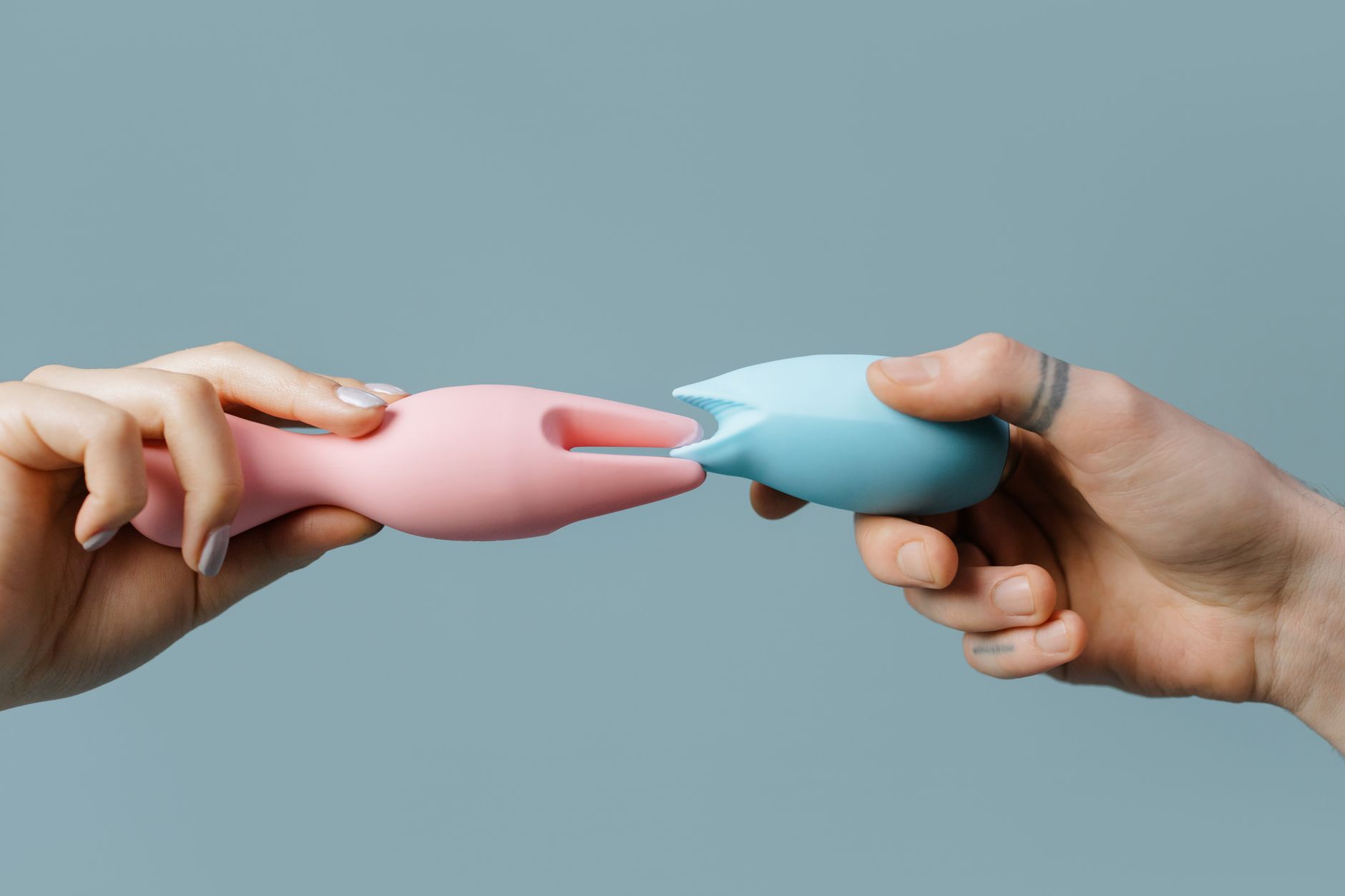
The Lem vibrator and other lemon clitoral vibrators are built around one core feature: real-time control. You're not locked into a preset speed the way you are with most vibrators. You can start at intensity level one and move up to level four. You can drop back down. You can pulse. You can sustain. This matters because it means both partners can get what they need from the same tool, just with different settings.
Here's what that actually looks like in practice: one partner uses pattern one or two on the Lem vibrator for sustained, building pleasure. The other uses pattern four or five for that deep, immersive sensation. You can switch off. You can both use it at different moments. You can even use it together with different intensity zones. The toy doesn't force you into a compromise.
Compare that to a lot of standard vibrators where you get three speeds and that's it. You either compromise on speed or you don't use it together at all.
Building the conversation before you need it
The timing here matters. Don't wait until you're already in the moment and one person is frustrated. That's when defensiveness kicks in and suddenly intensity becomes about who's satisfied and who isn't, which spirals fast.
Instead, bring it up when you're clothed and calm. Try something like: "I've been thinking about us exploring more with toys, and I realized I'm not totally sure what intensity you actually prefer. Like, are you someone who likes to start slow and build? Or do you like jumping into deeper sensation?" This is a genuine question, not a critique.
Most people soften when asked directly. They'll tell you. And half the time, you'll learn something you didn't know because this conversation probably hasn't happened explicitly before.
Practical setup: lemon sexual toys for different preferences
Once you've talked about preferences, here's how to actually use lemon vibrators to bridge the gap.
If one of you loves subtlety and the other craves intensity. Start together on lower patterns. This creates a shared entry point. Then one of you can adjust up while the other stays grounded. You're literally in sync on intensity because you started there. The person who wants more sensation can move up gradually. The person who's satisfied can stay put. You're not in opposition.
If one of you needs a lot of warm-up time. Lower intensity patterns on the Lem work beautifully for extended sessions. You can spend 20 minutes at levels one and two without anyone feeling like they're "not getting there." This is where lemon sucker toys shine. They're not punishing you with constant stimulation. You're getting sustained sensation that lets arousal build.
If one of you gets overstimulated easily. Pattern four and five exist for the person who thrives on deeper sensation. But if your partner is sensitive, they can use patterns one through three or step back entirely. Again, lemon clitoral vibrators let you both use the same toy at completely different settings without anyone feeling left out.
The role of lubrication in intensity work
Honestly, a lot of intensity mismatch is actually a lubrication issue in disguise. If someone needs high intensity to feel anything, it might be because friction is making lower intensity uncomfortable. If someone flinches at intensity, it might be because they're drying out and every vibration feels harsh.
Water-based lube changes this equation. It lets gentler patterns feel more pleasurable because you're not fighting friction. It lets intense patterns feel intense in a good way instead of uncomfortable. Before you decide one of you "needs" higher intensity, try a good lube first.
This is one of those unsexy practical things that actually transforms the experience. Apply during warm-up. Reapply if things slow down. It's not a sign something's wrong. It's just how bodies work.
What to do when preferences shift mid-session
Stuff happens. You start at a certain intensity and 10 minutes in, one of you wants more or less. This is where the conversational piece kicks in.
Instead of physically grabbing the toy and changing settings without asking, just say it. "I think I want to turn this up a bit." Or "Can we dial it back?" It sounds awkward written out, but in the moment it takes two seconds and keeps both people involved in the decision.
I work with couples who tell me this kind of communication felt unnatural at first. After a few times, it became automatic. And they were shocked how much permission that simple check-in gave them both to actually say what they wanted.
When intensity preference reflects something deeper
Sometimes different intensity preferences are just different intensity preferences. Sometimes they're a signal that something else is going on. If one partner suddenly only wants very high intensity, it might be numbing (which could mean depression or just needing a change). If one partner suddenly flinches from anything more than minimal sensation, it might be discomfort, anxiety, or disconnection from the relationship.
These aren't toy problems. They're relationship or health problems that a lemon vibrator can't fix. But they do show up during sex first. So if you notice a significant shift in what someone wants, that's worth a separate, non-sexual conversation.
The lemon sucker advantage for couples
One thing worth mentioning: suction-based toys like the Lem vibrator work differently than traditional vibrators at different intensities. At low patterns, you get gentle suction and pulsing. At higher patterns, it's more intense but not in an aggressive way. It's in a pulling, rhythmic way. This means the intensity gap between partners often feels smaller because the sensation itself changes character rather than just getting "louder."
People who've used both say that couples with different preferences find the Lem easier to share because the intensity experience is actually qualitatively different at each level, not just quantitatively "more vibration."
Practical next steps
If this is landing for you, here's what I'd suggest: have the conversation first. Ask what intensity your partner actually prefers without judgment. Get a lemon clitoral vibrator that gives you real control (something with multiple patterns). Try it together starting low. Let yourselves adjust up or down without commentary. Notice what happens when you're both getting what you need at the same time.
Different intensity preferences aren't a problem to solve. They're just a detail to navigate. And honestly, couples who figure this out end up exploring more because they're both actually satisfied, not just going through the motions.
People also ask
Do lemon vibrators have multiple intensity settings?
Yes. The Lem vibrator has five distinct intensity levels, and you can move between them seamlessly during use. This is one of the features that makes it useful for couples with different preferences. You're not locked into one speed.
What if my partner thinks intensity preference means something is wrong with me?
It doesn't. Intensity preference is just neurology. Some people have higher nerve density, some have lower. Some people need more stimulation to reach orgasm, some need less. It's like how some people need a higher volume to hear clearly and others find loud noise distressing. Neither person is broken. You're just different, and that's completely normal.
Can you use a lemon vibrator at different intensities during the same session?
Completely. You can start at a lower pattern for warm-up, adjust up over time, and shift back down if needed. You can also take turns, with one partner using a higher setting while the other uses a lower one. The toy supports all of these patterns.
Should we buy two lemon sexual toys if our preferences are very different?
Not necessarily. One Lem vibrator with five intensity levels might be all you need. But some couples prefer having two so you can use them simultaneously without fighting over settings. It's a preference thing. One quality toy is a better investment than two mediocre ones.
How do I bring up intensity preferences without hurting my partner's feelings?
Frame it as curiosity, not criticism. "I want to understand what actually feels best for you" sounds different than "This isn't working for me." Ask in a calm moment. Make it clear this is about expanding pleasure together, not about anyone being deficient. Most people feel relieved when someone asks directly instead of guessing.
What if we tried lemon clitoral vibrators but the intensity mismatch is still frustrating?
Then the issue might not be the tool. It might be about communication patterns, unresolved tension, or something health-related like pain or numbness. That's when working with a therapist or sex educator becomes helpful. A better toy can't fix relationship disconnection, though sometimes it reveals what was already there.