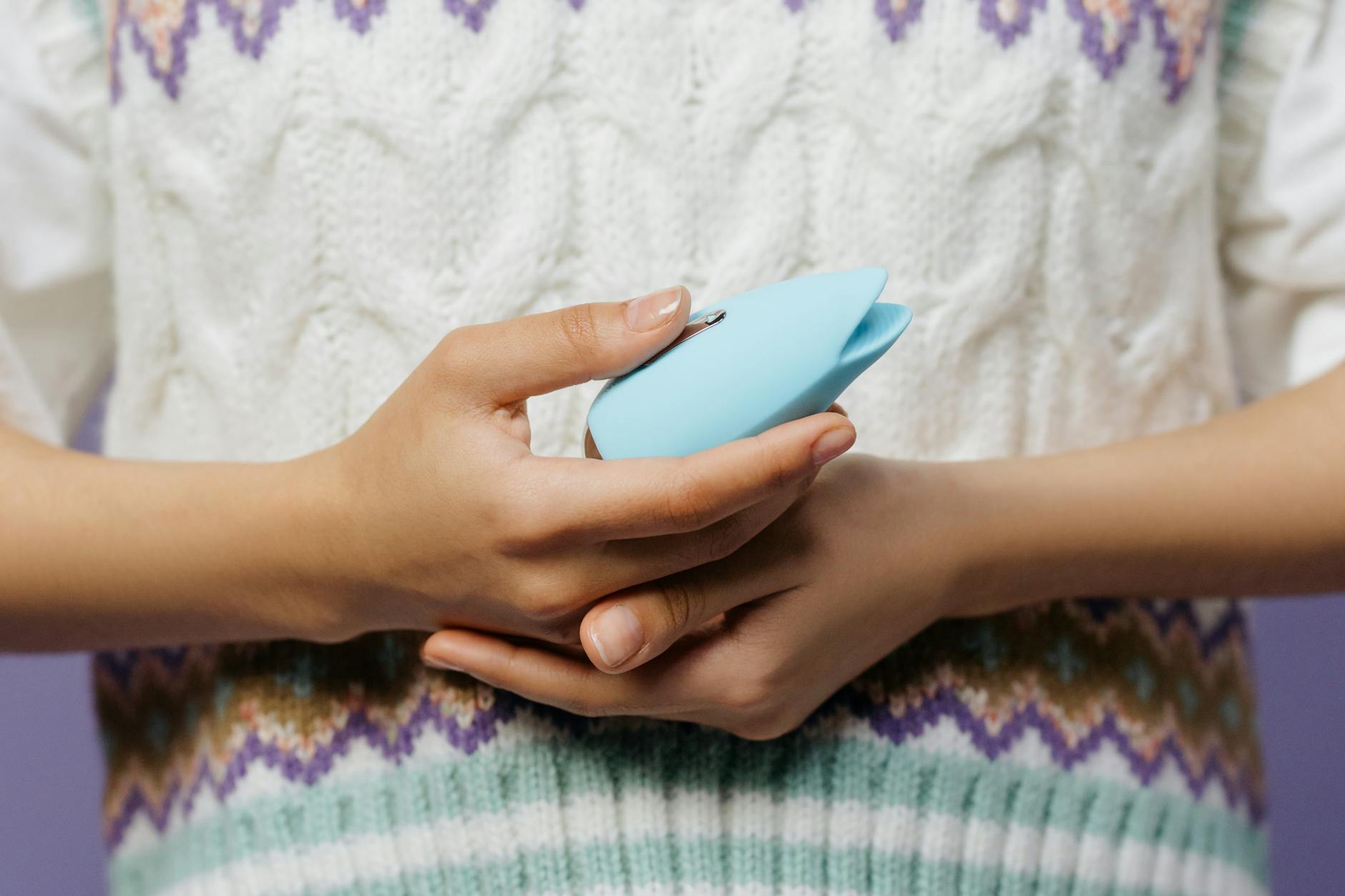
Let's start with what's actually happening
Hormones don't just affect your body. They rewire how your nervous system talks to your clitoris. When estrogen, testosterone, or progesterone shift—whether from birth control, perimenopause, postpartum changes, or medication—the whole signal chain changes. Your clitoris has fewer receptors firing at baseline. Your skin becomes thinner. Your lubrication system runs differently. That's not weakness. That's your body doing exactly what it's designed to do.
The thing is, this also means the pleasure you felt before won't feel the same if you try to recreate it exactly. You have to rebuild, not return. And lemon vibrators are genuinely one of the best tools for that because they work with thinner tissue and don't require the same kind of friction that can feel painful or numb on hormonal-shifted skin.
Why sensation feels different after hormonal shifts
Estrogen affects tissue thickness, blood flow, and nerve sensitivity. When estrogen drops, your vulvar tissue gets thinner—we're talking about the quality of the skin itself, not the size or shape. That thinness means less cushioning during stimulation. It also means nerves are closer to the surface, which sounds like it should feel more, but actually often feels less because the nerve endings themselves don't have as much estrogen support.
Then there's testosterone. If your testosterone drops (which happens postpartum, in certain birth controls, or around menopause), desire itself can flatten. Not because you're broken or sick, but because testosterone is literally part of the neural pathway for wanting sex. This is clinically documented and also absolutely normal.
Progesterone shifts—especially in the luteal phase if you still cycle—create a different kind of numbness. Higher progesterone can make stimulation feel dull or require more intensity to register.
And here's the thing nobody mentions: your brain changes too. Hormonal shifts affect dopamine sensitivity, which means the reward signal your brain gets from pleasure actually dulls. Your body isn't responding less. Your nervous system is interpreting the signal differently.
The specific problem with rebuilding pleasure alone
Here's where most people get stuck. You try your old method—the intensity, the pattern, the timing—and either it hurts or it doesn't work. So you push harder, assuming you need more stimulation. That's the opposite of what helps.
When sensation shifts, sensitivity actually increases. Your nervous system is more reactive, not less. Pushing harder triggers pain or oversaturation. What you need instead is slower, varied stimulation that lets your nervous system gradually learn this new configuration of your body.
Lemon clitoral vibrators are designed for exactly this. They use suction and pulse patterns instead of raw vibration, which means you can get strong stimulation without aggressive friction. You can layer different patterns and intensities without the whole thing becoming a assault. You have control.
The rebuilding protocol that actually works
Start by mapping where sensation lives now. Not where it used to live.
Take a lemon vibrator, start on the lowest setting, and spend five to ten minutes just touching your whole vulva—not targeting the clitoris yet. Your labia, your perineum, the hood. Notice what wakes up. You'll probably find some spots that feel numb and others that feel almost too sensitive. That's your new sensation map. Don't skip this step. This is where you actually start rebuilding.
Next, bring the vibrator to your clitoris, still on the lowest setting. Stay there for two to three minutes. Most people want to jump to intense stimulation immediately because they're chasing the feeling they used to get. Resist that. You're not chasing. You're building a new pathway. Two to three minutes at baseline is long enough for your nervous system to start waking up.
If nothing happens after three minutes, that's fine. Do it again tomorrow. And the next day. The magic of hormonal rebuilding isn't about intensity. It's about consistency. Your nervous system needs repetition to rewire.
After three to five days of baseline, start experimenting with patterns. Most lemon vibrators have four to eight pattern options. Try a different one each session. Don't change the setting yet, just the pattern. Let your body learn that different rhythms create different sensations.
Only after you're consistently feeling something at baseline and across patterns should you increase intensity. And increase it slowly. One level per week, maximum.
Why lemon suction vibrators work better for this than traditional vibrators
Traditional vibrators work by moving back and forth against your clitoris really fast. That kind of direct friction, when your tissue is thinner and more sensitive from hormonal shifts, often creates pain or numbness. It's like touching skin that's already irritated with a rough texture. Your nervous system shuts down.
Lemon clitoral vibrators work differently. The suction motion creates a gentle pulling sensation that stimulates the entire clitoral complex—not just the tip. This spreads the stimulus across more tissue, so no single area gets overstimulated. It also works beautifully with thinner tissue because there's no grinding friction. There's just rhythmic pressure and release.
For people rebuilding after hormonal changes, this matters enormously. You get strong sensation without pain. You can control intensity by how much of your clitoris you position in the suction cup. You can change patterns and rhythms easily. You're not fighting your body. You're working with it.
The partner conversation that matters
If you're rebuilding sensation with a partner, here's the conversation to have: "My pleasure pathway is recalibrating right now. I need to explore this alone first, and then we can rebuild together."
This is not rejection. This is safety and honesty. When you're rebuilding, having someone else's expectations in the room—even silent ones—adds pressure that makes it harder for your nervous system to relax. Solo exploration gives you data first. Then partnership becomes easier because you actually know what works.
If your partner is frustrated, remind them that your body changing isn't about them. Hormones are hormone. That's biology, not a reflection on attraction or desire. You're not less sexy. You're differently sexy.
Common blocks when rebuilding sensation
Impatience. The fastest way to stay stuck is to keep chasing the old feeling. Hormonal changes can take three to six weeks to fully settle into a new baseline. You're not giving yourself enough time.
Too much intensity too fast. I see this constantly. Someone spends two days on level one and then jumps to level four because they're "not feeling anything." That's exactly how you trigger pain or actual desensitization. Slow is faster.
Not enough warm-up time. Your body now needs longer to warm up. Budget fifteen to twenty-five minutes where you used to need five. This isn't negotiable. Blood flow takes time to build when hormones are shifted.
Skipping the solo work. I cannot stress this enough. You cannot rebuild sensation by having someone else stimulate you while you're guessing at what feels good. Do the mapping work alone first.
When to check in with a doctor
If you're experiencing pain during any of this—not just numbness, but actual pain—see a gynecologist. Pain is different from numbness and needs different solutions. Genitourinary syndrome (GSM), pelvic floor tension, or other conditions can look like sensation loss but actually need medical attention.
Also, if you've been rebuilding for six weeks and there's literally zero sensation change, talk to your doctor. Sometimes hormonal shifts need medication support. That's not failure. That's information.
The part about patience that actually helps
Rebuildling sensation after hormonal changes is boring. It's methodical. It's not sexy or fast. And that's exactly why it works. Your nervous system doesn't learn through intensity. It learns through gentle, consistent repetition. That's neuroscience, not a suggestion.
You're not broken. Your body is working exactly as it should in response to chemical changes. The lemon vibrators you use now will feel better—different, yes, but deeply good—than the ones you used before. Because they'll actually match where you are now, not where you were.
Frequently asked questions
How long does it actually take to rebuild sensation after hormonal changes?
Three to six weeks is the clinical baseline. Some people see shifts within days. Others need two months. The variables are how recently the shift happened, whether you're still in transition, and how consistently you practice. If you do this three to four times per week, you'll see changes faster than if you do it once a month.
Can I use the same lemon vibrator I used before my hormones shifted?
Yes, absolutely. The vibrator hasn't changed. Your body has. You might find you're using different settings or patterns than you used to, which is totally normal. You might also find you actually prefer it now because it works better with your current sensitivity. Many people report that lemon clitoral vibrators feel even better post-shift because suction is gentler on changing tissue.
What if I have vaginal dryness along with the sensation loss?
Dryness and sensation loss often show up together during hormonal shifts. You'll want water-based lubricant as part of your rebuilding work. The lubricant isn't a sign that something is wrong. It's a tool that helps your skin not get irritated while you're relearning sensation. Use it generously. It makes everything feel better and lets you focus on pleasure instead of discomfort.
Is it normal to feel nothing at all in the first week?
Completely normal. Your nervous system might be so desensitized from the hormonal shift that it literally doesn't register stimulation at first. This doesn't mean you're broken or that the vibrator isn't working. It means your body needs more time to wake up. Keep going. The sensation usually kicks in by week two or three.
Should I tell my partner I'm rebuilding sensation, or should I keep it private?
That depends on your relationship and how comfortable you are. If you share a bed or a life, honesty is usually easier than silence. You don't have to be clinical about it. "Hey, my body is responding differently lately, so I'm taking some time to figure out what feels good" covers it. Most partners actually feel relieved because they often think it's about them.
Can birth control or medication affect how quickly I rebuild?
Absolutely. Certain birth controls, antidepressants, and other medications can dampen sensation or desire. If you're on something that affects hormones or neurotransmitters, check in with your doctor about the timeline. They might suggest adjustments or they might confirm that rebuilding will just take longer. Either way, that's data that helps.
Rebuilding sensation after hormonal changes isn't about pushing harder or finding the right toy. It's about patience, consistency, and actually listening to what your body is telling you right now. Lemon vibrators give you a tool that works with thinner tissue, with changing nerve sensitivity, with all of it. The rest is just time and gentleness with yourself.
Your pleasure didn't disappear. It just needs a new map.