Let's name the real problem
You're not broken. You're not too sensitive or not sensitive enough. You're not overthinking it, and you don't need to "relax more." What's actually happening is that your body needs something different than what partnered sex alone provides.
This is extraordinarily common. Studies suggest up to 70% of people with vulvas don't regularly orgasm from penetration alone, and even direct clitoral stimulation from a partner can feel inconsistent, too gentle, too intense, or poorly timed. When you're trying to coordinate someone else's rhythm with your own arousal curve, friction builds. Not the good kind.
Why partner sex doesn't always get you there
There are three mechanical reasons this happens, and none of them are about love or attraction.
First: positioning limits access. During most partnered sex, your clitoris is either partially covered or at an angle that makes direct stimulation tricky. Your partner can't easily reach it while maintaining their own rhythm and position. They're working around geometry that wasn't designed for dual orgasm.
Second: rhythm mismatch. Your arousal builds on a specific tempo. Their arousal builds on a different one. You're the only person who truly knows exactly where you are in your own pleasure curve. A partner can learn, but they're always running slightly behind your internal pacing.
Third: pressure and pattern matters. Clitoral stimulation is not just "more stimulation faster." It's about specific pressure, specific patterns, and specific speeds. Some people need air-suction motion instead of direct friction. Some need broad pressure across the whole vulva instead of focused touch on the clitoris itself. Most people's hands, no matter how enthusiastic, can't replicate what a well-designed tool can.
This isn't a deficiency in your body. It's a mismatch between what partner sex provides and what your neurology actually needs.
Why lemon clitoral vibrators change the equation
Lemon vibrators, especially ones using suction or pulsing technology like the Lem, work because they solve all three problems at once.
They're positioned exactly where you need them. You control the angle, the depth, the pressure. No negotiating with a partner's hand position while also maintaining arousal.
They move at your speed. You set the vibration level and pattern. If you need to pause, speed up, or hold steady for a moment, you can without disrupting your partner's experience. You're no longer coordinating two separate pleasure timelines.
They create sensation you can't generate by hand alone. Suction-based vibrators like the Lem use pulsing motion that stimulates a broader nerve network than direct friction. This produces orgasms that feel deeper and more full-bodied than what many people achieve through partner touch alone.
Most importantly: they remove the pressure. When you're trying desperately to orgasm while someone is doing their absolute best to help, tension builds. Not just physical tension. Psychological pressure. The worry that you're taking too long, that they're getting tired, that maybe something is wrong with you. A tool removes that emotional weight.
How to introduce this without making it weird
Let's be honest. Bringing a vibrator into partnered sex can feel vulnerable. Here's how to do it with actual ease.
Step one: Separate the conversation from the sex. Have this talk at breakfast, not during foreplay. Pick a calm moment. Say something like: "I've been thinking about orgasm during sex, and I realized I think I'd enjoy it more if I used a vibrator sometimes. I want to try it with you." Not "There's something wrong with how we're having sex." Just: this is something I want to add.
Step two: Frame it as addition, not subtraction. You're not replacing partnered sex. You're completing it. Make sure they know that their touch, their presence, their connection is still essential. The vibrator isn't a referendum on their skills. It's a tool that helps your body do what it needs to do.
Step three: Start without pressure to perform. Use your lemon vibrator during solo sessions first. Get comfortable with it. Figure out exactly which intensity level, which pattern, which position works. Then when you introduce it during partnered sex, you already know what you're doing. You can guide them: "I like it when you...," "Try this pattern..." You're leading, not figuring it out in real time together.
Step four: Use it as foreplay, not the main event. Try using your vibrator first, getting close to orgasm, then transitioning to partnered sex. Or use it during penetration. Or use it after, as the final element to cross the finish line. There are dozens of ways to integrate it. Pick one that feels natural.
What to actually do when you use it together
Here's the tactical part.
Start with penetration or manual stimulation as usual. When things feel good, introduce the lemon vibrator. Most people with vulvas respond best to suction-based stimulation on the external clitoris, which is why devices like the Lem work so well. Position it while your partner continues with whatever they're doing.
Don't expect a dramatic change the first time. This is new sensation in a new context. Your body might need a session or two to fully relax into it. Use whatever intensity level feels good. If you're using an external vibrator like the Lem, start on a lower setting. Many people skip straight to high intensity and then worry they're "too sensitive" when actually they just went from zero to a hundred.
Talk while you're doing this. "A little higher," "Hold that pattern," "This feels good." Communication removes performance anxiety and actually makes the whole thing more connected, not less. When your partner knows exactly what's working, they feel useful and engaged, not replaced.
If you're someone for whom arousal builds slowly, you can also use your vibrator solo earlier in the day or before your partner even arrives, so you're already partially primed. You don't have to jump straight into using it together.
The psychological shift that matters most
Here's what I see happen with couples who start integrating lemon vibrators into their sex life: the pleasure improves, yes, but the bigger shift is permission. Permission to advocate for what you need. Permission to take ownership of your own orgasm instead of waiting for your partner to create it.
When you stop treating orgasm as something your partner should be able to give you and start treating it as something you can achieve together using the right tools, the entire dynamic changes. You're no longer performing for them. You're collaborating with them. That distinction is everything.
Mostly, using a lemon clitoral vibrator means you stop apologizing for your own pleasure. You stop trying to squeeze your body into what partner sex provides and instead expand partner sex to include what your body actually needs.

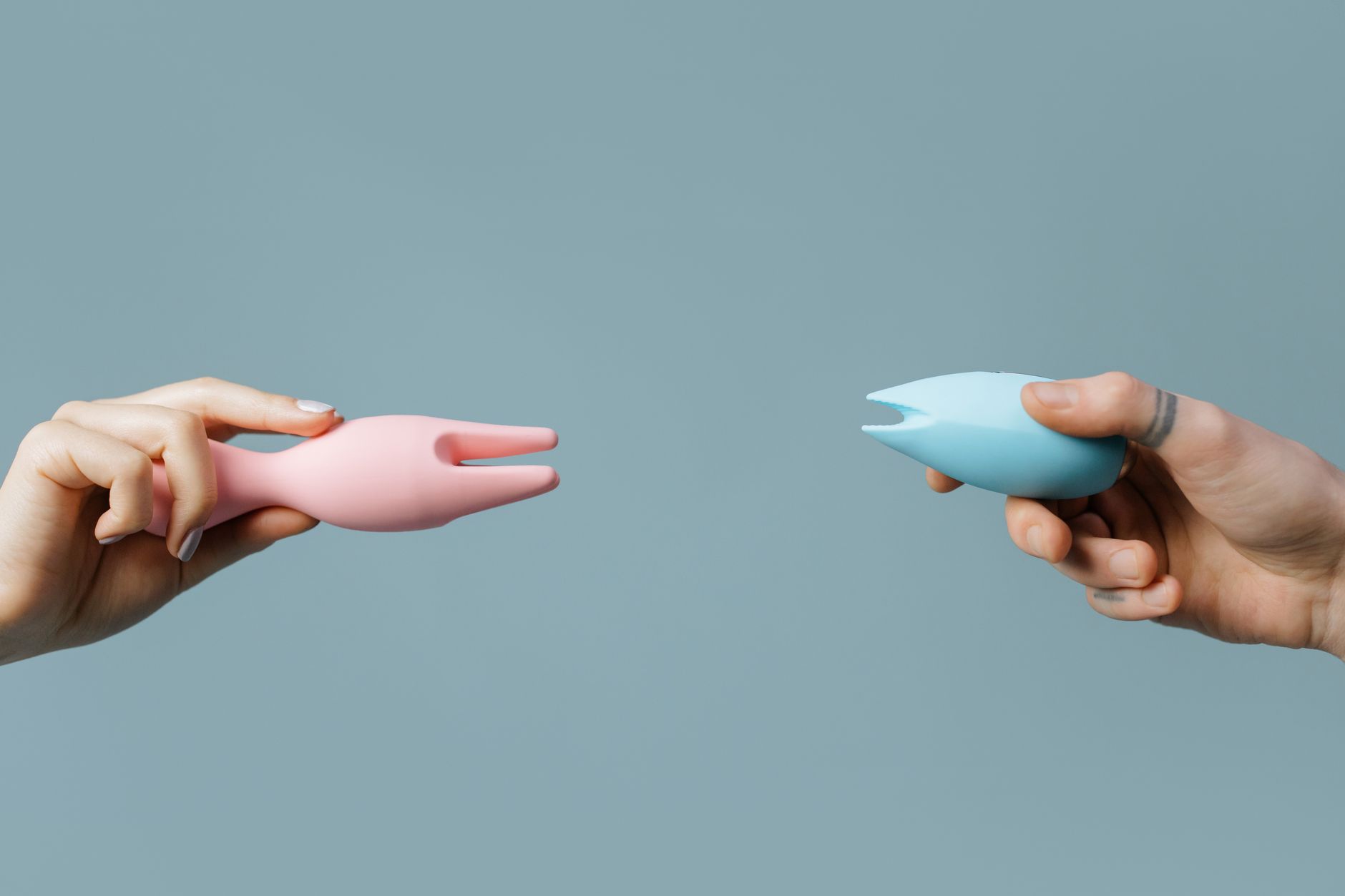
Photo by cottonbro studio on Pexels
Frequently asked questions
Will using a vibrator make partnered sex less satisfying?
No. In fact, the opposite usually happens. When you regularly experience orgasm, even if sometimes it requires a tool, your nervous system stays more engaged overall. You're less likely to drift into disconnection. If anything, the reliability of your own pleasure makes you more present and responsive during partnered sex.
Does my partner have to be okay with this right away?
Not necessarily. Some partners have initial hesitation rooted in insecurity or outdated ideas about what sex "should" look like. That's real, and it's worth addressing directly. But remember: this isn't about them. This is about you accessing your own pleasure. You can introduce the conversation gently, but don't abandon your own needs to manage their feelings indefinitely. If they genuinely can't adapt, that's a compatibility question worth exploring.
How do I know which intensity level to start with on a lemon vibrator?
Start low. Genuinely low. The clitoris has thousands of nerve endings packed into a tiny area, so what feels like "nothing" on your arm might feel intense on your clitoris. You can always turn it up. You can't un-overstimulate in the moment. Most people find that medium settings work best for partnered use because they provide stimulation without making you too sensitive to also feel your partner's touch.
Can I use a lemon vibrator if I'm on certain medications?
Most medications don't interfere with vibrator use. However, some antidepressants (particularly SSRIs) can make orgasm harder to reach. If you're on medication and struggling, that's worth discussing with your doctor. If you want more specific guidance, check out how lemon vibrators help after stopping SSRI antidepressants for deeper context.
What if I still can't orgasm even with a vibrator?
Then you have information. You know the issue isn't your body or your relationship. It might be hormonal, medication-related, neurological, or psychological. That information is actually valuable because it helps you and your partner seek the right support. A sex therapist or your doctor can help from there. But you've ruled out the most common mechanical barriers, which is progress.
Is it normal to feel self-conscious using a vibrator with a partner?
Completely normal. You're vulnerable, you're asking for what you need, and you're introducing a tool that challenges ideas you might have absorbed about what sex "should" look like. Self-consciousness isn't a sign you shouldn't do it. It's a sign you're doing something brave. It usually passes after the first time or two, once you realize nothing bad happens and your partner doesn't suddenly lose attraction to you.
The bottom line
Difficulty reaching orgasm with a partner is wildly common and almost never about your body being broken. It's about the gap between what partner sex provides and what your specific neurology needs. Lemon vibrators close that gap. They give you control, consistency, and the ability to take ownership of your own pleasure without requiring your partner to read your mind or perform like a well-programmed machine.
The best part: they make partnered sex better, not worse. Because when you're not anxious about whether it's going to happen, you actually relax. And when you relax, everything feels better.
If you're ready to explore this, start with a conversation and work from there. Your pleasure matters. Your satisfaction is not a luxury or an optional upgrade to partnered sex. It's a legitimate part of connection. Tools that help you access it are worth trying.
Have questions or want personalized guidance on how to navigate this conversation with your partner? Get in touch. We're here to help.