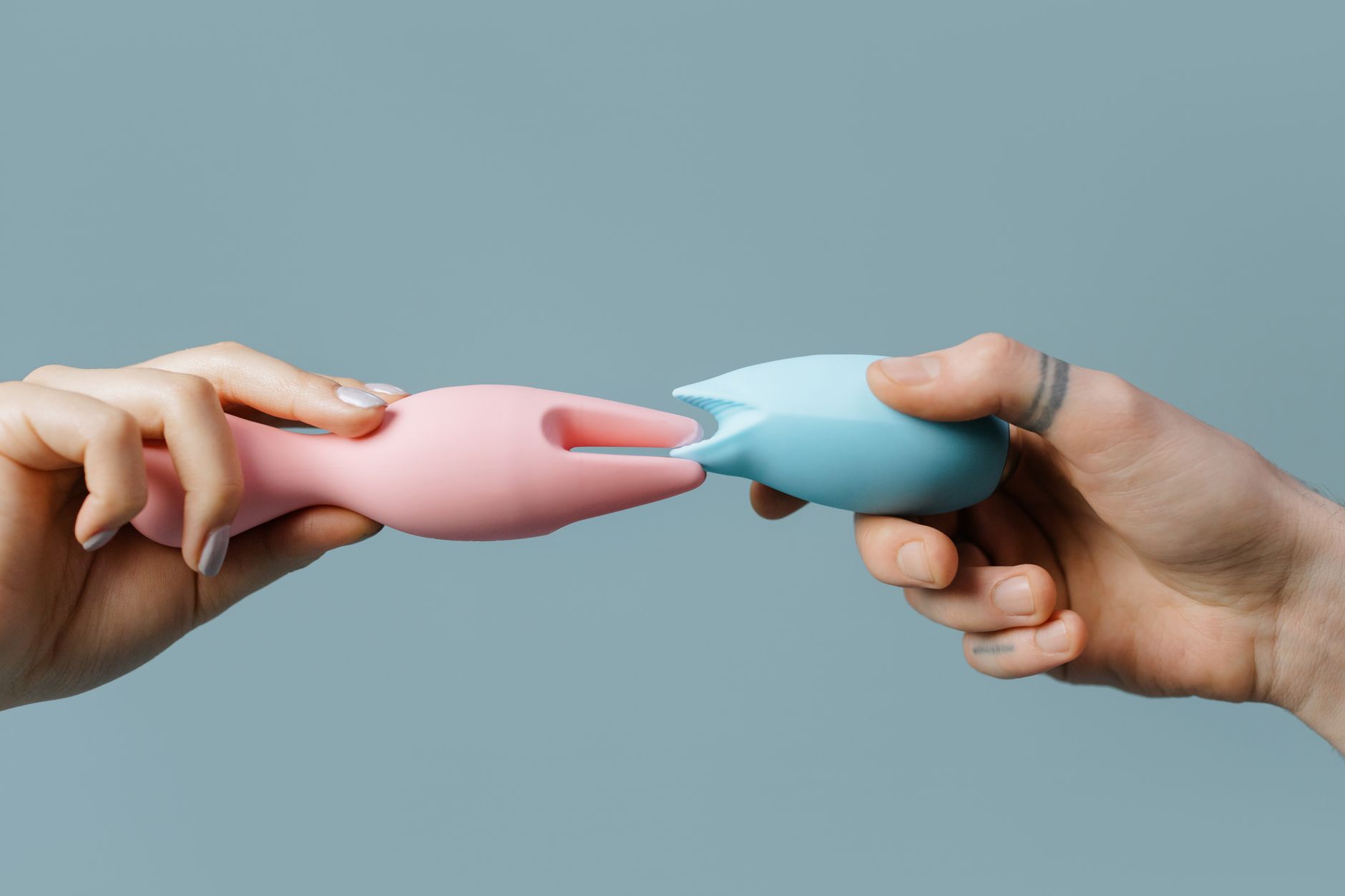
How to Use Lemon Vibrators With a New Partner Without the Awkward Conversation
Let's be real. You've been dating someone for a few weeks or months, things are getting good, and you're thinking about bringing a vibrator into the mix. The mental loop starts: Will they think I don't like them? Will they feel replaced? Is it too soon? Will they judge me?
Honestly? Most of those fears are ghosts. And the ones that aren't—the ones that actually signal a real compatibility issue—are exactly the conversations you want to have now, not three years in.
The timing question nobody talks about
There's this weird assumption that you need to wait until a relationship has some invisible maturity threshold before mentioning pleasure toys. That's not backed by anything except anxiety.
The real timing rule is simpler: introduce it when you feel safe with this person, not when a calendar says you're "allowed." For some people that's the third time you're intimate. For others it's the fifteenth. The variable is trust and communication readiness, not the date.
That said, there are moments that work better than others. Don't bring it up mid-sex for the first time. Don't mention it when you're already frustrated about something else. Don't lead with "I need this because you're not doing it right." Those framings create defensiveness where there doesn't need to be any.
Instead, bring it up as an exploration you want to do together, ideally when you're both clothed, relaxed, and there's no pressure to perform. A conversation over coffee or on the couch works infinitely better than anything in the heat of the moment.
What to actually say
Here's the thing about new partners: they're usually more worried about being bad at sex than they are about toys. Reframe the conversation around that.
"Hey, I've been thinking about something and I want to be honest with you. I really like where things are going with us, and I want to explore more of what feels good for me. I'm curious about trying a lemon clitoral vibrator together. It's not about what we're doing wrong—it's about adding something that feels amazing for me, and I'd love to experience that with you."
That's it. No apology, no lengthy justification, no "but you're still enough." (That second part is implied and can feel patronizing.)
If they ask questions, answer them directly. Yes, you want to use it during sex. Yes, you've thought about it before. Yes, you'd like them to be involved. No, this doesn't mean you want to change your relationship. These are all normal follow-ups and there's no trick answer.
Why new partners often react better than you'd think
People in new relationships are usually hungry for information about what their partner likes. It solves a puzzle they've been trying to figure out. "What actually gets you there?" is a question most new partners are dying to answer.
When you show up with clear information about your pleasure—here's the tool, here's why it works for me—you're actually making their job easier and hotter. You're not creating a problem. You're offering a solution to a question they've probably had.
The partners who react poorly to this—who get defensive, who make it about themselves, who try to convince you that you shouldn't need it—those are real data points about compatibility. And you're getting them early enough to matter.
The practical introduction
Once they're on board (or even mostly on board), bring an actual lemon clitoral vibrator into the conversation by showing them. Let them see it. It's less intimidating than described and normalizes it instantly.
Talk about what it does. "It uses suction instead of just vibration, so it feels different than a regular vibrator." Let them know how you plan to use it. "I'm thinking during foreplay" or "I want to try it during sex" or "I want to explore solo first and then maybe we can play together."
Then ask what they're curious about. Do they want to control it? Do they want to learn your body through watching what makes you respond? Do they want to use it on you? There's no single right answer, and their involvement matters way less than your comfort.
What actually happens the first time
The first time you use a lemon vibrator with a new partner, there's often a weird moment of silence where they're watching, you're feeling vulnerable, and everyone's slightly self-conscious. That's normal and it passes in about thirty seconds.
Once you start using it, most partners become genuinely fascinated. They watch your face, your body, how you move. They see what actually turns you on. That information is gold for them—it teaches them more about your pleasure than months of guessing.
Some partners want to be hands-on immediately. Some want to sit back and learn. Some want to take turns or explore together. All of those are fine. The key is just communicating about it as you go. "I like when you hold it" or "Can you try this setting?" or "I want to show you something."
If it's awkward, name it. "This feels a bit vulnerable but I'm into it." Vulnerability is sexy. Pretending it's not there is what actually kills the mood.
The conversation after
Don't ghost the topic once it's over. A quick "that was hot" or "I liked that" or "I want to try that again" keeps it normalized. You're not asking for a three-hour debrief. You're just signaling that this is a normal part of your intimate life now, not a one-time experiment you're embarrassed about.
If your partner seemed hesitant or uncomfortable, check in separately. "I noticed you seemed quiet. How are you feeling about what we tried?" gives them space to be honest without pressure. Maybe they need more time. Maybe they want to try a different approach. Maybe they loved it but were just processing it. All of that is workable information.
The bigger picture
Introducing lemon clitoral vibrators early isn't about testing whether someone's "cool enough." It's about establishing a baseline: we talk about pleasure. We're curious. We're not going to suffer in silence or pretend everything's fine when it isn't.
That conversation matters more than the toy itself. Partners who can handle a direct conversation about pleasure tend to handle other direct conversations better too. They're usually better at saying what they want, hearing what you want, and actually showing up for it.
So bring it up. Worst case, you find out early that you're not compatible on something important. Best case, you open a door to more honesty and better sex. Both outcomes beat staying silent and hoping your new partner reads your mind.
FAQ: Introducing vibrators to new partners
What if my new partner thinks I brought it up too soon?
That's information. You're not asking permission—you're communicating an interest. If they genuinely need more time, you can respect that and revisit it later. If they're trying to control when you experience pleasure, that's a different kind of information and worth paying attention to early. Either way, you know something useful about them.
Can I just surprise them with a vibrator during sex?
Not ideally. Surprises that involve your body and their comfort level tend to backfire. A heads-up conversation takes five minutes and saves you from an awkward freeze moment mid-intimacy. It also shows respect, which is sexy.
Will they think I don't enjoy sex with them if I use a vibrator?
Not if you frame it right. A clitoral vibrator during partnered sex isn't a replacement—it's an addition. Most new partners actually find it hotter because they get to watch you come, which is genuinely thrilling for them. You're not asking them to leave the room. You're asking them to stay and enjoy.
What if they want to control the vibrator and I don't want that?
Say so. "I want to handle it myself" is a complete sentence. If you want to share control, you can always do that later once you're both more comfortable. Pleasure toys are not about compromise on something you're uncomfortable with—they're about expansion.
How do I know if they're really okay with it or just going along?
Watch for enthusiasm or watch for that polite agreement. Enthusiasm usually looks like curiosity, asking questions, wanting to touch it, making eye contact. Polite agreement looks like short answers, topic changes, physical distance. If you see the second one, check in. "You seem hesitant. That's totally fine if you need more time." gives them permission to be honest.
What if they want to use it differently than I do?
That's a conversation. "I was thinking we'd use it during foreplay" versus "I want to use it during penetration" is a timing thing you can figure out. Some partners want to control it, some want to use it on you, some want to use it on themselves while you're together. None of these are wrong—they're just different, and you get to have preferences too.
Moving forward
Introducing a lemon clitoral vibrator to a new partner is a small act that signals something bigger: you value your own pleasure, you're willing to communicate about it, and you see partnership as a conversation rather than a performance. That's the real win here, way beyond the toy itself.
If you're ready to move forward, find the right Lemon Clit Toys product for your needs, or reach out if you have questions about what might work best. And if you want to dive deeper into partner communication about pleasure, read more on how to use vibrators with your partner when communication feels awkward.