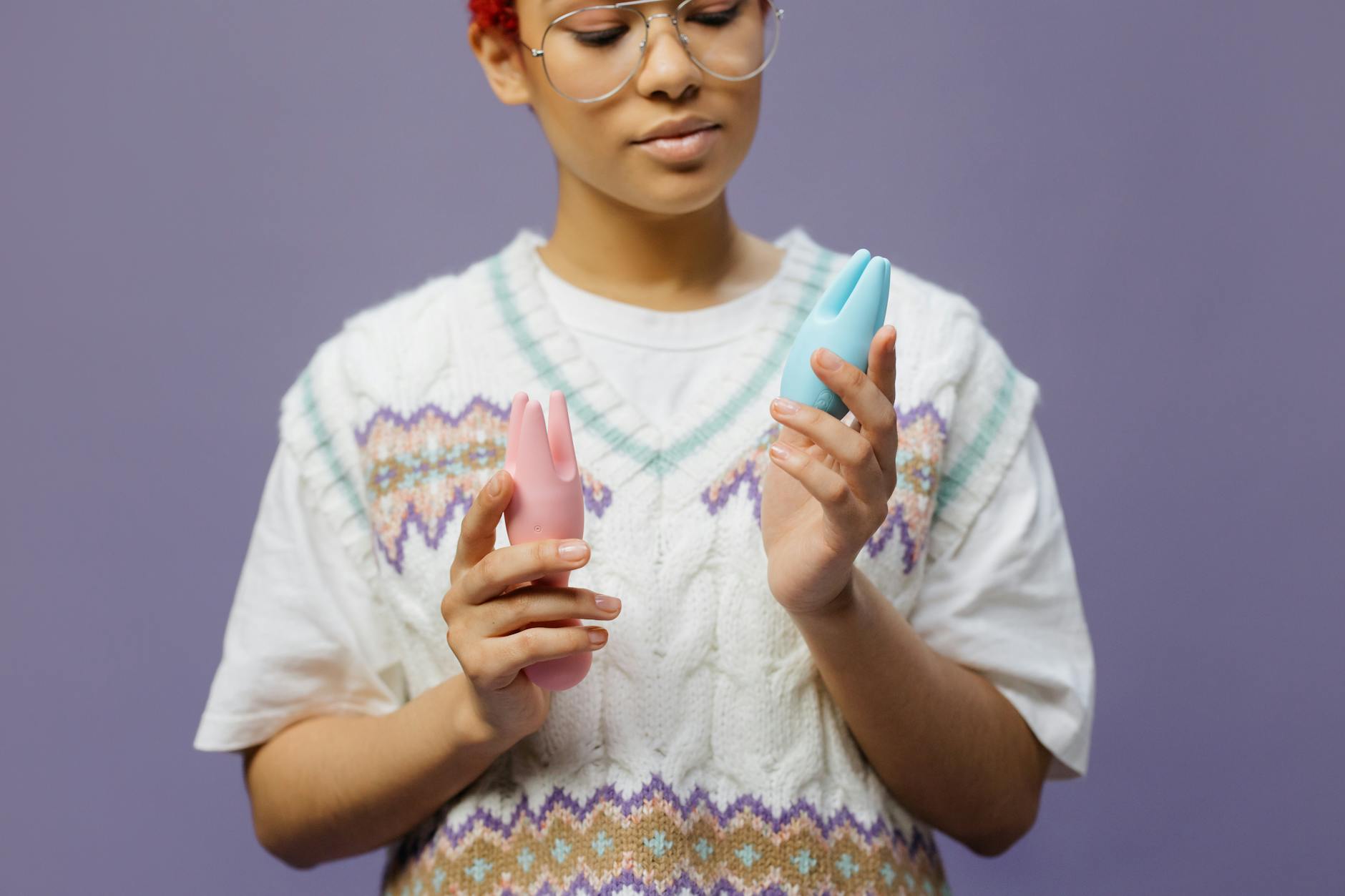
Let's start with what you're actually worried about
You like your new partner. Things are going well. But here's the thing: you know what you like, and you're pretty sure a lemon clitoral vibrator would make everything better. The problem is the voice in your head that says introducing toys means admitting something is missing, or worse, that you're being weird.
That voice is lying. What you're actually doing is being direct about your pleasure. That's not a sign of a weak connection. It's the opposite.
Why new relationships are actually the best time to introduce this
Countintuitively, early relationships are when this conversation lands most easily. Here's why: the novelty is still there. You're both still curious about each other. Neither of you has built up years of assumptions about what sex "should" look like. You're in the window where trying something new feels exciting rather than like a correction of past behavior.
Compare that to a 10-year relationship where one partner suddenly introduces toys for the first time. The other person might wonder why now, what changed, whether their partner was unhappy all along. In a new relationship, it's just part of the discovery process. You're figuring out what works together.
There's also a practical truth: new partners haven't internalized your pleasure as "theirs" yet. They're less likely to take it personally. They're more likely to hear "I want better orgasms" as information rather than criticism.
The conversation framework that actually works
Forget the perfect moment. There is none. But there are worse moments than others.
Avoid bringing this up during sex, right after sex, or when either of you is tired, stressed, or defensive about something else. The best time is a regular conversation, in clothes, with time to talk. Afternoon coffee. A walk. Not when you're already in bed.
Start with honesty about your own pleasure, not about what's missing with them. "Hey, I've been thinking about my pleasure in general, and I know that using a lemon vibrator actually helps me orgasm more easily. I'd love to explore that with you." Notice the frame: this is about your body and what you know about it, not about your partner's performance or your relationship's shortcomings.
Then pause. Let them respond. They might say "Yeah, let's try it" or "I need to think about that" or "Tell me more." All of those are fine. You're not asking for permission. You're inviting them into something that matters to you.
If they seem hesitant, don't pivot into persuasion mode. Instead, ask what the hesitation is about. "What's making you uncertain?" gives them space to name the actual concern. Sometimes it's insecurity ("Will I be replaced by the toy?"). Sometimes it's unfamiliarity ("I don't know what that even is"). Those are two completely different conversations that need different answers.
What to do about the insecurity question
This comes up, and it deserves a straight answer. A lemon vibrator is not a replacement for a partner. It's a tool that does one specific thing really well: intense, consistent clitoral stimulation. Your partner does everything else. They create arousal. They kiss you. They read your mood. They make you feel desired. A toy does none of that.
In fact, using a vibrator together can make partnered sex better, not worse. Here's why: you know exactly what gets you there. You can show your partner. They get to watch you enjoy something, which most partners actually find hot. And you have fewer orgasms you're faking or straining for, which means the sex you're having together is more honest.
The research backs this up. Studies on couples who introduce toys together consistently show increased satisfaction and reduced sexual anxiety for both partners. The people who struggle most are the ones who hide the toy or use it only solo, which turns it into a secret.
How to make the first experience easy
Once they've said yes (or "let's try it"), here's what helps.
First, let them hold it before you use it. Let them feel the weight, see the design, turn it on and feel the vibration pattern. Demystifying it matters. A lemon clitoral vibrator looks deliberately different from a traditional vibrator. It's small, focused, designed for external stimulation. Seeing it in their hand makes it concrete rather than scary.
Second, bring it out when you're already aroused. Not as the main event, but as part of what you're already doing. You're making out, things are escalating, and then you say, "Want to try this?" or "Can you help me with this?" The question of whether to use it is already answered by your bodies, not by your heads.
Third, give them a role. They can hold it while you guide their hand. They can use it on you while you're touching them. They can control the intensity while you tell them what feels good. This isn't something happening to them. They're involved.
Fourth, talk during. "That feels amazing," or "Try it a little higher," or "Slower" gives your partner real-time feedback and makes the whole thing collaborative. You're not disappearing into sensation. You're still connected.
What to do if they say no
Some people genuinely aren't comfortable with toys. That's real. It's not a dealbreaker unless you need this to be a dealbreaker.
Here's the question to ask yourself: do you need to use toys with a partner, or do you need to be with someone who's open to the idea? Those are different things. If you need a partner who's fully on board, that's important information. If you're willing to use toys alone and be with someone who isn't interested in them, that's also valid.
But before you decide it's a dealbreaker, give them time. "No" in a first conversation doesn't always mean "never." Sometimes it means "I'm surprised, let me think about it." Bringing it up again in three months is different than bringing it up again next week. Space helps people move from defensive to curious.
If they remain firmly opposed and it matters to you, that's a compatibility question bigger than the toy. That's about whether your needs for pleasure and exploration can coexist with their boundaries. Those are worth working through, ideally with someone experienced in relationship coaching if the relationship is serious.
The pleasure shift that happens after
Here's what I see most often once a couple has crossed this bridge: the relief. You're no longer performing pleasure. You're experiencing it. Your partner gets to see you genuinely aroused, genuinely satisfied. They get to be part of that instead of in charge of creating it single-handedly. The pressure on both of you drops.
New relationships are already exciting. Adding this layer of honesty and exploration doesn't threaten that. It deepens it. You're saying, "I trust you with my pleasure. I trust you with who I actually am." That's way more intimate than the toys themselves.
The lemon clitoral vibrator becomes not a sign that something was wrong, but evidence that you were both willing to try something together. It becomes part of your relationship's story.
FAQ: Bringing toys into a new relationship
When exactly in a new relationship should I mention this?
After you've been intimate a few times and things feel established enough that you're already planning more intimacy together. Usually this is weeks 2-4 for people who move quickly, weeks 4-8 for people who take longer. Not on the first date. Not after the first hookup. Once sex feels like something you're building together, not something you're testing out.
What if they think I've used toys before and that's "wrong"?
First, using toys solo before a relationship is completely normal and healthy. Second, if your partner thinks your sexual history or knowledge is a problem, that's a red flag about compatibility, not about you. A partner worth having wants you to know what makes you feel good.
Will they think I'm not attracted to them if I want to use a toy?
Not if you frame it right. Say explicitly: "I'm really attracted to you, and I know my body better when I use a vibrator. I want both of these things." Attraction and self-knowledge are not in competition.
Is it better to use toys solo first, or together first?
Together is usually easier for new relationships. You're already in the intimacy together. It's harder to have secret solo toy use and then introduce it later. Going together keeps everything transparent and collaborative.
What if they want to use a toy but I don't?
That's totally fine. You're not required to be into the same things. The question is whether you're comfortable being present while they use one. If you are, great. If you're not, talk about that too. Boundaries go both ways.
How do I know if it's actually going to help, or if I'm just adding complexity?
You probably already know. If you've used a lemon vibrator or any vibrator before and it reliably helps you orgasm, you know the answer. You're not guessing. You're sharing something that works for your body.