
The thing nobody tells you about penetration pain
Here's the honest bit: if penetration hurts, you're not broken. Your body isn't being difficult or punishing you. It's doing exactly what it's designed to do. It's protecting you.
Pain during penetration, whether sharp or dull, immediate or delayed, signals that something in your body needs attention. That something might be physical. It might be psychological. Often it's both tangled together so tightly you can't separate them. The good news? Lemon clitoral vibrators sidestep the whole problem by offering full-body pleasure that doesn't require penetration at all.
What causes penetration pain (and why it matters)
Penetration discomfort falls into a few categories, and knowing which one you're dealing with changes everything about how you move forward.
Vaginismus is involuntary tension in the pelvic floor muscles. Your body clamps down, sometimes so firmly that penetration feels impossible. This isn't a choice. The muscles are responding to a real or imagined threat, protecting what they perceive as vulnerable. It's common after sexual trauma, in people with anxiety, or sometimes with no obvious trigger at all.
Dyspareunia is pain during penetration that can come from inflammation, infection, endometriosis, scar tissue, or insufficient lubrication. Unlike vaginismus, it's not a muscular reflex. It's tissue irritation. Entirely different fix.
Anxiety-driven pain sits in the middle. You tense up thinking about pain, which creates tension, which creates pain, which reinforces the fear. It's a loop. Breaking it often requires taking penetration completely off the table for a while.
The thing these all share? Clitoral pleasure works independent of any of them. Your clitoris doesn't care whether you're penetrated. It doesn't require relaxation of the vaginal muscles. It responds to direct stimulation. Full stop.
Why lemon clitoral vibrators change the game
Lemon vibrators work differently than your fingers or a partner's touch alone. The sustained, precise stimulation of a lemon clitoral vibrator lets you build arousal without pressure, without performance expectations, and without the goal of penetration hanging overhead like a threat.
When you're focused on penetration, even unconsciously, your nervous system stays partially locked in a protective state. The pelvic floor stays slightly tense. Arousal plateaus. Sensation dulls. You're not relaxed enough to feel much of anything.
A lemon clitoral vibrator gives you permission to ignore penetration entirely. You can focus only on what feels good right now, in this moment, with zero progression required. That permission shift is enormous.
Here's something else that matters: lemon clitoral vibrators like the Lem use air-pulse technology instead of traditional vibration. This means they stimulate the external clitoris and surrounding tissue without the repetitive friction that can feel intense or even uncomfortable if you're already dealing with sensitivity.
Starting fresh with lemon vibrators
If you've been avoiding pleasure because penetration was painful, your nervous system might need time to trust the new pattern. That's normal.
Start in a space where you feel genuinely safe. Not obligated, not rushed, not somewhere you need to perform for anyone. Phone on silent. Door locked. Full stop.
Begin by exploring your body without the vibrator. Notice where you're holding tension. Your shoulders, your jaw, your thighs. Breathe deeply a few times. Not meditation breathing (unless that's your thing). Just bigger exhales than inhales.
When you use a lemon vibrator for the first time in this new context, start on the lowest setting. The impulse is to jump to a higher intensity because you're used to needing more stimulation. Resist it. You're not numb. You're just relearning what pleasure feels like without pain tangled up in it.
The pattern I recommend: fifteen to twenty minutes of exploration. Don't chase orgasm. Let your attention drift across different areas. Some people find that the outer labia feels best first. Others need to warm up with broader stimulation before the clitoris becomes sensitive enough to enjoy direct contact.
What changes about arousal when penetration isn't on the table
This is crucial: your arousal pattern might be completely different when there's no penetration expectation.
Without the pressure to progress toward penetration, many people report that their arousal actually deepens. The mental load lifts. Sensation intensifies. You can stay in a plateau state longer, which sometimes leads to fuller, longer-lasting orgasms.
You might also notice that you're more sensitive in places you didn't expect. The inner thighs. The lower belly. The underside of the collarbone. These zones light up when your nervous system isn't busy protecting your vaginal entrance.
This is where partnered pleasure gets interesting. If you have a partner, they can take time learning your body in this new way. Hands, lips, or their own vibrator alongside yours. The pressure to perform is gone. It becomes exploration rather than obligation.
Building back to partnered pleasure (if and when you want to)
Let me be clear: you don't have to rebuild anything. Clitoral pleasure is a complete, valid form of sexuality all on its own. Some people leave penetration behind entirely and don't look back. That's fine.
But if you want to reintroduce penetration someday, lemon clitoral vibrators can help you get there.
Once you've spent weeks or months rediscovering pleasure without penetration, your nervous system has new evidence: pleasure happens, and it's safe. That rewires something deep. The protective tension eases.
When you do decide to try gentle penetration again, do it on your own terms first. Your fingers, a partner's fingers, whatever feels least threatening. No agenda. Just presence. Often people find that having a lemon vibrator running on the clitoris while exploring penetration very gently takes the edge off entirely. The pleasure at the clitoris is so engaging that the vaginal sensations register as interesting rather than threatening.
Always use plenty of water-based lubricant. If you're anxious, your body won't self-lubricate much. That's not a sign to push harder. It's a sign to add external lube and maybe slow down further.
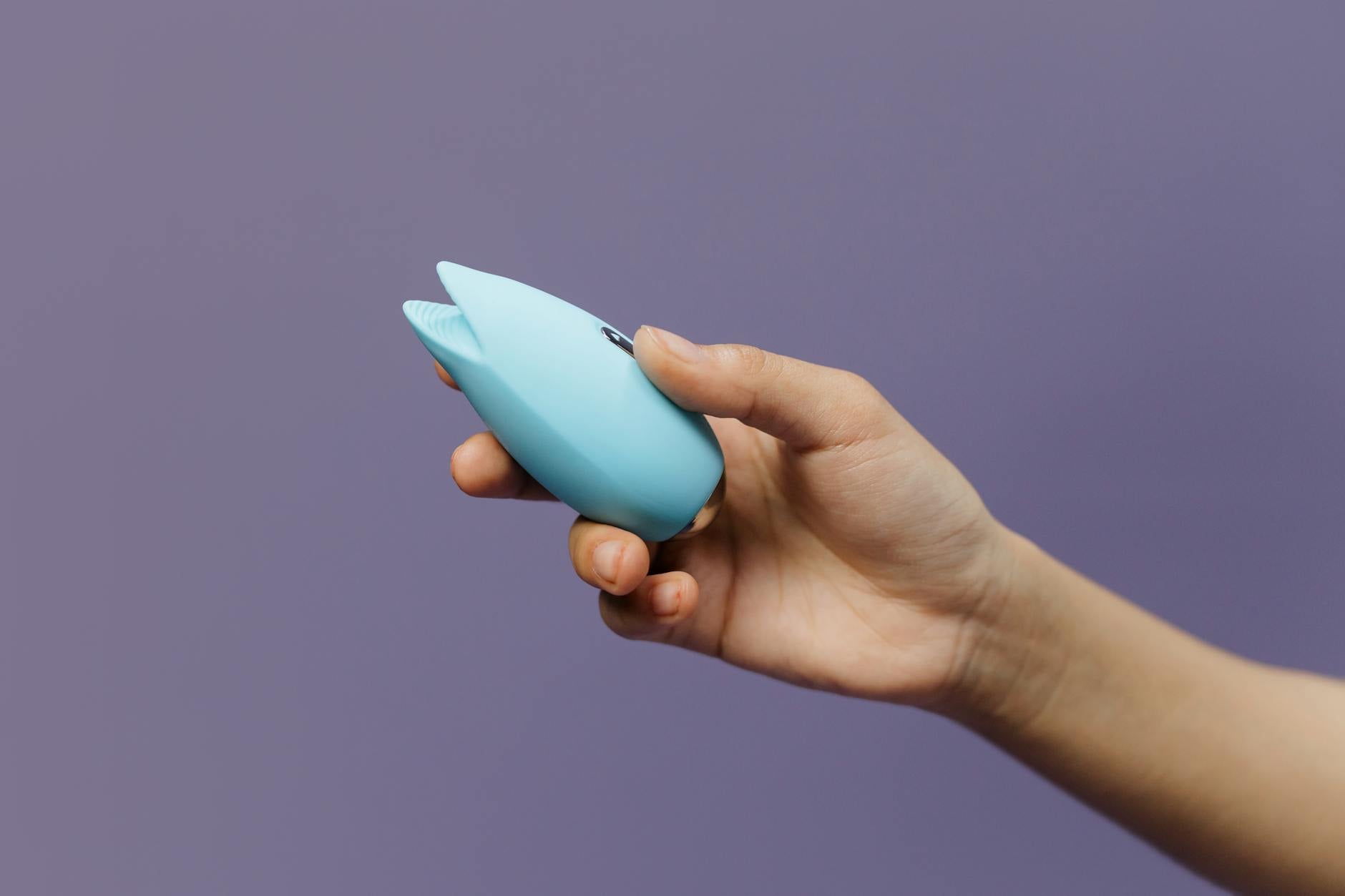
Photo by cottonbro studio on Pexels
When to see a doctor (yes, really)
If penetration pain is new, or if it's been persistent for more than a few months, get it checked. A gynecologist or pelvic floor physical therapist can rule out infection, inflammation, endometriosis, or other tissue issues.
Pelvic floor physical therapy is genuinely transformative for vaginismus and tension-based pain. A therapist teaches you how to relax the pelvic floor muscles, often using biofeedback or gentle dilators. It sounds clinical. It is. And it works.
If you've been dealing with this for years, a trauma-informed sex therapist can help you untangle the psychological side. Sometimes the pain started from something physical, but now the fear of pain is the primary problem. That requires a different kind of attention.
Lemon clitoral vibrators are a tool for pleasure. They're not a substitute for medical care if something is actually wrong.
The freedom part
Here's what I've seen happen when people stop fighting their bodies and start working with them instead.
The shame lifts. You realize that your body isn't broken. It's just being honest about what it needs. Once you stop pushing against that and start listening, everything shifts. You discover that pleasure doesn't have one shape. It doesn't require one specific thing. It's infinitely variable, and your lemon clitoral vibrator opens doors you didn't know existed.
You get to redefine what sex means to you. For some people, that means penetration returns eventually. For others, it means that penetration never happens again and they have better orgasms than they ever did before. Both are victories. Both are valid.
Start where you are. Use the tools that work. Be patient with your body. It's been trying to protect you. Now you're learning to protect yourself while also giving yourself permission to feel good.
People also ask
Can lemon vibrators help if I have vaginismus?
Absolutely. Vaginismus is involuntary tension in the pelvic floor, but your clitoris isn't involved in that reflex. A lemon clitoral vibrator lets you experience pleasure completely separate from the muscles that are tensing. This can actually help break the fear cycle because you're getting evidence that your body can feel good without that protective tension being activated. That said, if vaginismus is severe, pairing vibrator use with pelvic floor physical therapy gives you the best results.
Is it normal for the vibrator to feel uncomfortable at first?
Yes. If you've been experiencing pain during sex, your nervous system might be in a protective state. The first time you use a vibrator, start on the lowest setting and give yourself permission to stop anytime. You're retraining your nervous system to recognize sensation as safe. That takes time. Weeks, sometimes. Be patient.
What if I've never had an orgasm from penetration and don't want to try anymore?
Then don't. Clitoral orgasms are legitimate and complete sexual experiences. About seventy percent of people with vulvas need direct clitoral stimulation to reach orgasm. You're not an outlier. You're normal. Lemon clitoral vibrators can help you get there reliably and consistently, which is honestly better than chasing penetrative pleasure that never worked anyway.
Can I use a lemon vibrator if I'm also taking anxiety medication?
Yes. Some antidepressants can affect sensation, but that's a separate issue from penetration pain. A lemon clitoral vibrator works on different neural pathways than the ones anxiety medication affects. That said, if you've noticed numbness or dulled sensation since starting medication, talk to your doctor about whether your dose needs adjusting. That's worth addressing directly rather than trying to work around it with toys.
Do I need to tell my partner I'm using lemon vibrators?
That depends on your relationship and your comfort level. Some couples benefit from openness about pleasure tools. Others keep that private. The important part is that you're not hiding it because of shame. You're using a vibrator because it feels good and helps you explore your body. That's fine either way. If you do want to involve your partner, frame it as exploration, not performance. "I'm learning what I like" is different than "You weren't doing it right."
What if penetration pain is caused by scar tissue or endometriosis?
Then you need medical evaluation and possibly treatment. A lemon clitoral vibrator is a wonderful tool for pleasure while you're dealing with that, but it's not a replacement for seeing a specialist. Endometriosis and significant scar tissue require proper care. Use your vibrator to keep your relationship with pleasure alive while you're getting the medical support you need.
Next steps
If penetration has been painful, your body has been sending you a message. The first step is listening to it instead of arguing with it. How to Use Lemon Vibrators When You're Recovering From Sexual Assault explores pleasure rebuilding after trauma, which overlaps with this conversation. Similarly, How Lemon Vibrators Help When Your Body Feels Different After Pelvic Surgery addresses pain that comes from physical changes.
You deserve pleasure that doesn't hurt. That's not a luxury. That's a baseline. Lemon clitoral vibrators can help you get there. And if you have questions about what might work best for your specific situation, reach out to us. We're here to help.