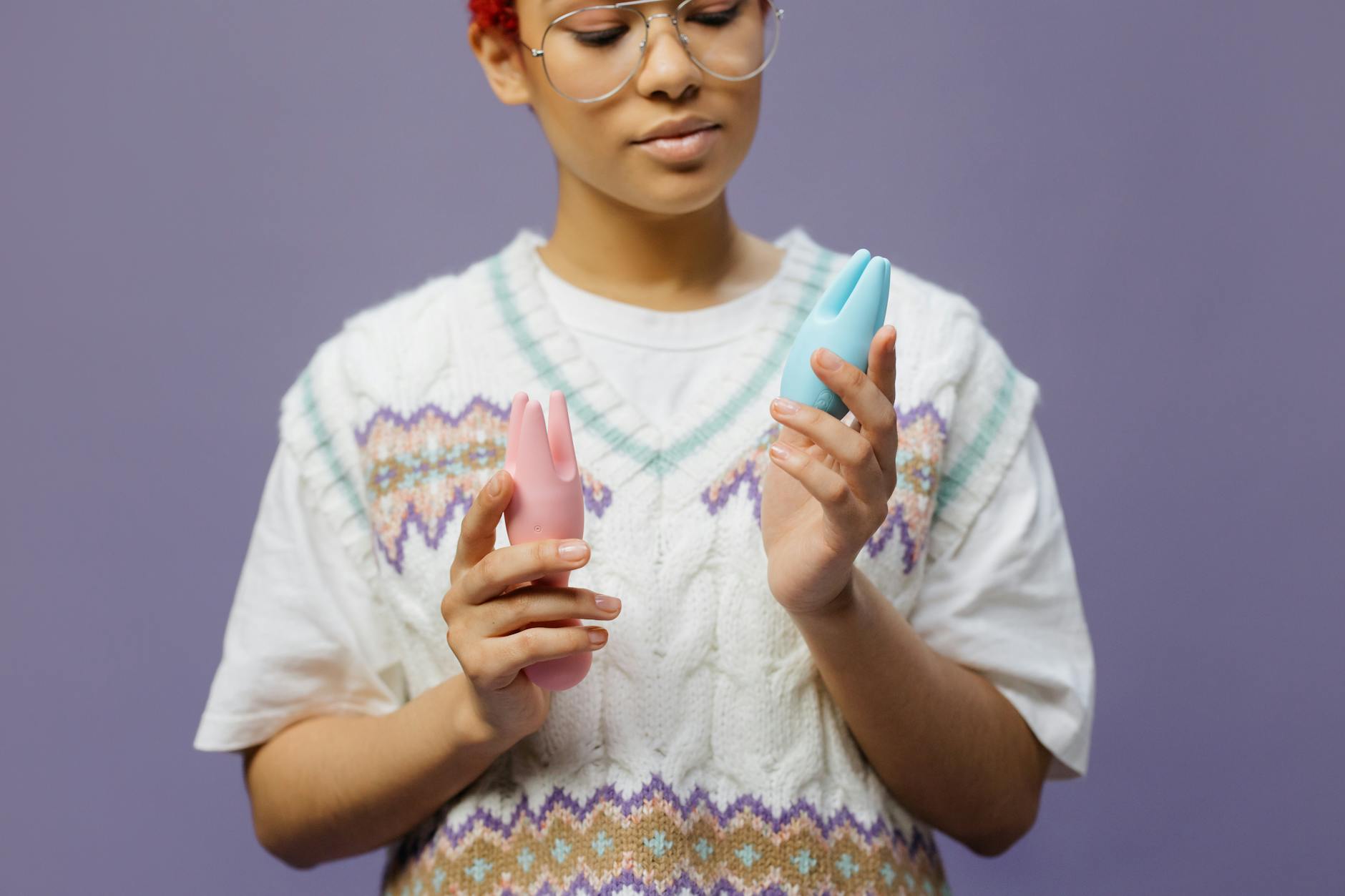
The lubrication problem nobody talks about
Let's be real. You bought a clitoral vibrator. You applied lube. And then your skin started to sting, burn, or feel weirdly numb. So you stopped. That's the standard ending to this story, and it's the worst one.
The issue isn't that you're broken or overly sensitive. It's that lubrication is not a one-size solution. What works for one person, or what works for one activity, can actively sabotage someone else's pleasure. And when you're using a Lemon vibrator or any high-intensity clitoral toy, the wrong lube choice gets amplified.
Why lube can feel wrong (even when it's "supposed" to be good)
There are three main culprits, and they're not what most people assume.
Osmolality mismatch. This is the big one nobody explains. Osmolality is basically how many dissolved particles are in the lube. When there's a big gap between the lube's osmolality and your body's fluid osmolality, water moves. Your tissues get irritated, it stings, or the lube feels sticky and wrong. Most commercial water-based lubes are actually hypertonic (higher osmolality than your body), which pulls water out of your tissue. That's why it burns.
Preservatives and irritants. Parabens, glycerin, and phenoxyethanol are common in mainstream lubes. They're cheap and effective, but about 30 percent of people find them uncomfortable. Glycerin in particular can feed yeast and bacterial overgrowth, which means a reaction that feels like irritation but is actually an infection starting.
The vibration effect. High-frequency vibrators like Lemon clitoral vibrators amplify whatever's on your skin. A lube that feels fine during static touch can feel like burning when there's vibration involved. The toy is literally driving irritants deeper into sensitive tissue.
What actually works (and why)
Three categories of lube solve this, depending on what went wrong.
Hypo-osmolar water-based lubes (the gold standard for vibrators). These have osmolality closer to your body's natural fluid, so they don't pull water out of tissue. Brands to look for: Hyalo Gyn, Hyalofemme, or any lube that explicitly lists "low osmolality" or "iso-osmotic." These feel slippy without the sting.
Silicone-based lubes (for people who can't use water-based). They don't dry out, they don't have the osmolality problem, and they last longer. The catch: they're hard to clean off and will degrade silicone toys. If you're using a Lemon vibrator (which is silicone), stick to water-based. But if you had a toy made of glass or stainless steel, silicone lube is genuinely the move.
Oil-based or hybrid lubes (for the right situation). Pure oils like coconut oil or jojoba oil have zero osmolality issues and won't irritate most people. But they're oily, they stain sheets, and they can trap bacteria. Save them for solo play with non-silicone toys, or with partners you're fluid-bonded with.
The lemon vibrator adjustment that changes everything
Say you've switched to a better lube and you're still getting discomfort. The next move is vibrator technique, not product switching again.
Start dry or nearly dry. This sounds counterintuitive. But high-intensity clitoral vibrators like the lemon toys work by creating stimulation. Adding too much lube actually muffles that sensation and makes you push harder, which makes irritation worse. Apply lube, let most of it absorb or dry slightly, then use the toy. You'll probably need less lube than you think.
Use lower intensity settings first. All Lemon vibrators have multiple patterns. Start on patterns 1 through 3, not pattern 10. Your tissue warms up, sensation builds naturally, and you'll find that you need less lubrication as arousal progresses. Jumping straight to high intensity with fresh lube is a recipe for irritation.
Apply lube to the toy, not your body. This gives you more control over quantity. A coin-sized amount on the vibrator head is usually enough. When you apply lube directly to your vulva and then add the vibrator, you end up with way too much, which spreads, pools, and causes the stinging sensation you're trying to avoid.
When to suspect an actual allergy or yeast response
If switching lube and adjusting technique doesn't help, and the irritation feels like burning specifically during or after vibrator use, you might have a contact allergy or you might be dealing with yeast.
Yeast thrives in sugary, warm, moist environments. Glycerin-based lubes feed it. If you're noticing itching that gets worse a day or two after play, or if you're developing a cottage cheese-like discharge, that's yeast. Switch to glycerin-free lube immediately and consider a topical antifungal (like miconazole cream) or a single-dose oral antifungal. This clears in days once you address it.
True contact allergies to lube ingredients are less common, but they happen. If you know you react to glycerin or parabens, avoid any lube containing those. Read the ingredient list carefully. The stuff you're reacting to might be buried as the fifth ingredient.
The psychological layer (and why it matters)
Here's what I see in my therapy practice: someone has a bad lube experience, assumes vibrators aren't for them, and gives up on a tool that could actually transform their pleasure. The frustration and disappointment get attached to the idea of using toys altogether.
That's a real loss, because clitoral vibrators work for most people when the friction problem is solved. The lube issue is fixable. It's not a reflection on your body or your capacity for pleasure.
If you've had a bad experience, give yourself permission to try again with a different approach. Start with a low-osmolality water-based lube (Hyalo Gyn is the strongest pick), use it sparingly, and use the vibrator on a lower setting. You might find that this is the thing that finally clicks.
Lube storage and freshness matter more than you think
One last thing: old lube goes bad. Water-based lubes can separate, thicken, or grow mold if they're exposed to air for too long or stored in a hot bathroom. Silicone lubes can oxidize. If you've had a lube bottle for more than a year, or if it's been sitting in your shower, throw it out and start fresh.
Store water-based lubes in a cool, dry place (a bedroom nightstand drawer, not the bathroom) and close the cap tightly after each use. If you use lube frequently, buy smaller bottles and replace them regularly. The few dollars you spend on fresh product will save you weeks of irritation and frustration.
FAQ
Can I use coconut oil with my Lemon vibrator?
Technically yes, but I wouldn't. Coconut oil breaks down silicone over time, and Lemon clitoral vibrators are silicone. If you love how coconut oil feels, use it with glass or stainless steel toys instead. For your Lemon vibrator, stick to water-based or silicone-based lubes designed to be toy-safe.
What if I'm allergic to water and silicone-based lubes?
This is rare, but it happens. Your best bet is a coconut oil or jojoba oil with a non-silicone toy, or a hybrid lube like Sliquid H2O (which mixes water-based and silicone). Before you settle on oil long-term, see a gynecologist to confirm the allergy. Sometimes what feels like an allergy is actually a yeast overgrowth or bacterial vaginosis triggered by lube ingredients.
Does lube temperature matter?
Yes, actually. Cold lube feels shocking and can trigger a contraction reflex. Room-temperature or body-warm lube feels better and is less likely to cause that "sting" sensation. Run your lube bottle under warm water for 30 seconds before use, or keep it in a nightstand where it naturally reaches body temperature.
Can reduced sensation during vibrator use mean the lube is wrong?
Often, yes. Certain lubes (especially thick, high-glycerin ones) can muffle vibration sensation. If you're not feeling much when you use your vibrator, try switching to a thinner, lower-glycerin lube, or go almost dry (just a tiny bit of lube on the tip). You might find that sensation jumps dramatically.
What if lube makes me feel physically nauseous?
That's unusual but worth investigating. It could be a strong smell or taste that's triggering nausea (silicone lubes can have a chemical smell), or it could be psychological association with something uncomfortable. Try an unscented, unflavored water-based lube, or try using the vibrator without lube at all. If nausea persists even with no lube, talk to a doctor or therapist.
Is expensive lube actually better?
Not necessarily. The best lube for you is the one without ingredients your body reacts to, in the right osmolality range. That might be a $12 bottle of Hyalo Gyn or a $40 bottle of a luxury brand. Price doesn't guarantee compatibility. Read the ingredient list and osmolality rating (if available), not the price tag.
The real takeaway
Lube irritation stops you cold because it makes pleasure feel bad instead of good. But it's one of the most fixable problems in sexual wellness. A lube switch, a technique adjustment, or both usually solves it within a session or two.
Your body isn't telling you that vibrators aren't for you. It's telling you that the specific lube and technique you used weren't a match. That's information, not a verdict. Take it, adjust, and try again. The pleasure you're looking for is probably just on the other side of a different lube bottle.
If lubrication issues persist after trying these fixes, or if you develop signs of infection or allergic reaction, reach out to a gynecologist. And if you want to talk through the psychological side of a bad experience with a toy, that's something I work with in therapy too. You deserve to feel good, not just tolerate something uncomfortable.