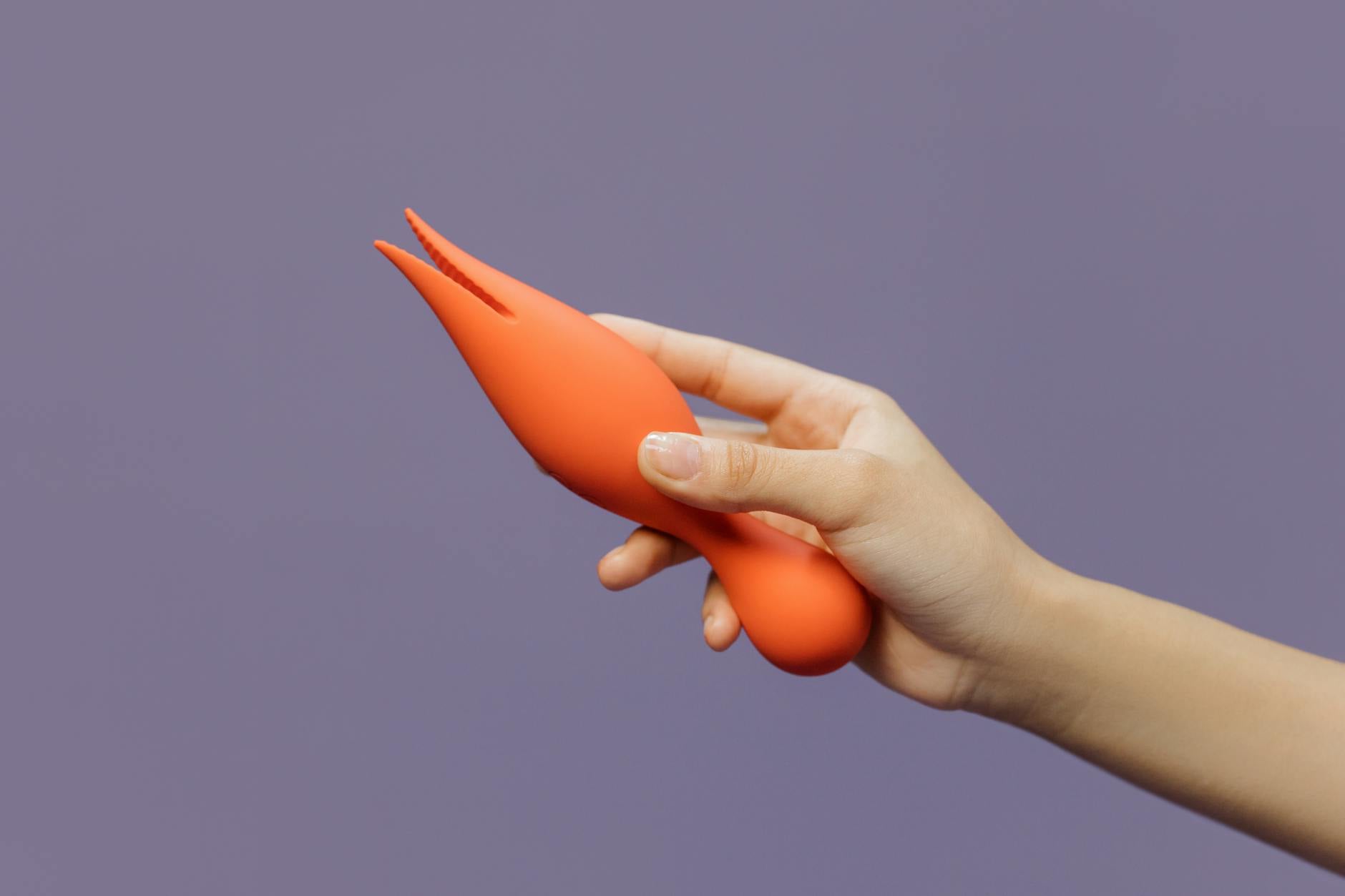
When hormones shift, sensitivity isn't a flaw
Let's be real: heightened clitoral sensitivity after a hormonal change feels like a betrayal. You finally have a lemon vibrator you love, you know how to use it, and suddenly the exact intensity that used to feel amazing now feels too sharp, too much, too raw. The instinct is to put it away and assume your body has broken.
It hasn't. What's actually happened is your tissue has changed. And that's not a stopping point. It's just a recalibration point.
Hormonal shifts (from birth control changes, perimenopause, postpartum recovery, or medication adjustments) can absolutely rewire how your clitoris responds to stimulation. The nerve endings don't change, but the tissue around them does. Estrogen and progesterone affect blood flow, tissue thickness, and the inflammatory response to touch. When those hormones fluctuate, sensitivity often increases temporarily. Most people bounce back. And in the meantime, your lemon sexual toys don't have to go into a drawer.
Why clitoral sensitivity spikes during hormonal transitions
Three physiological reasons this happens.
Inflammation is temporary but real. When hormones drop or shift suddenly, tissues can swell slightly. That swelling makes nerve endings feel more exposed. It's like touching a canker sore versus healthy skin. Same pressure, completely different sensation. The good news: this almost always resolves within weeks or a few months, depending on what's causing the hormone change.
Increased blood flow during arousal hits differently. Normally, increased blood flow to the clitoris during arousal creates a pleasant fullness and heightened sensation. During hormonal fluctuation, that same blood flow can feel overwhelming or uncomfortable because the tissue is already more sensitive at baseline. It's not broken. It's just amplified.
Nerve density doesn't change, but perception does. Your clitoris has about 8,000 nerve endings. Those aren't going anywhere. But how your brain interprets signals from those nerves changes based on hormone levels. Lower estrogen can make you feel sensation more acutely, while progesterone can dull it. Both feel "wrong" when you're used to your baseline. Both are temporary.
How to adjust your lemon vibrator technique
Four concrete changes that work immediately.
Start lower, build slower
If your lemon clitoral vibrator has speed settings, begin at the absolute lowest. Not pattern 2 or 3. Pattern 1, or whatever the gentlest option is. Spend 10-15 minutes there. Your nervous system needs time to recognize that sensation as safe rather than jarring. This is boring, I know. But it works.
If you're using a lem vibrator or similar suction-based tool, the same principle applies. Start on the lowest suction level and hold it there longer than you would normally. Let your body acclimate.
Add distance between you and the vibration
Direct contact during high sensitivity is like pressing a button on a bruise. It works, but it hurts. Instead, try:
Placing the vibrator through a thin layer of fabric (cotton underwear, a silk slip, or even a silk pillowcase). This muffles intensity without killing the stimulation. Many people find they can enjoy their lemon adult toys this way and still reach orgasm.
Using the vibrator on the hood of the clitoris rather than directly on the glans (the most sensitive part). The hood covers the clitoris naturally, so aim your vibrator slightly higher or hold it at an angle that contacts the surrounding tissue instead of the tip.
Extend your warm-up time
When sensitivity is high, arousal takes even longer to build than usual. Budget 20-30 minutes of non-genital touch, kissing, or solo exploration before you introduce your lemon vibrator. This isn't extra. This is essential. When your nervous system is primed for relaxation rather than jumping straight to high sensation, the clitoris feels less vulnerable.
Keep lubricant on standby
Even if you don't normally need extra lubrication, sensitive tissue responds better to it. Water-based lube creates a slick buffer between the vibrator and your clitoris, which softens sensation without changing the fundamental experience. Apply a small amount, then bring your vibrator in. You might find you need less of it than you'd expect.
When to use your vibrator versus when to pause
Not every day is a vibrator day when sensitivity is elevated, and that's fine.
If your clitoris feels tender, swollen, or painful even without stimulation, rest it. Take 2-4 days off. This isn't permanent. It's like a muscle after a new workout. It needs recovery time.
If sensation feels manageable but intense, a gentle session with your lemon vibrator at the lowest setting and through fabric can actually help. Stimulation signals to your nervous system that this sensation is safe, which paradoxically can reduce overall sensitivity over time.
If you're using hormonal birth control and just switched methods, give yourself a full cycle (28-30 days) before deciding your sensitivity is permanent. Your body is still adjusting. Many people find their baseline returns to normal after one or two cycles.
The mental piece matters as much as the physical one
Here's something I see constantly in my practice: when pleasure suddenly feels uncomfortable, people panic. The panic itself makes sensation feel worse. Your nervous system tightens, your pelvic floor clenches, and everything becomes more painful.
Then they think, "I'm broken," and they stop trying. Which means their nervous system never gets the chance to recalibrate.
Instead, reframe this as temporary recalibration. Your body isn't punishing you. It's adjusting to a change. You have agency here. You get to decide how fast to progress, what intensity feels okay, and when to take a break.
If you have a partner, be explicit about what's happening. "My sensitivity has changed temporarily, and I'm learning what feels good at different intensities." Most partners respond with relief when they understand it's not about them or your attraction to them. It's just biology doing its thing.
The timeline for sensitivity to normalize
This varies wildly depending on what caused the hormone change.
If you just switched birth control, most people see improvement in 1-3 months as the new hormones stabilize. If you're in early perimenopause, sensitivity may fluctuate for months but gradually stabilize. If you're postpartum and breastfeeding, hormones are wild and unpredictable; it's normal for sensitivity to shift weekly.
The pattern: sensitivity usually peaks in the first 1-4 weeks of a hormonal change, stays elevated for several weeks, then gradually declines. By month two or three, you're usually back to baseline or close to it.
During that window, your lemon vibrator isn't useless. You're just using it at a different setting, in a different way, on a different timeline. That's not failure. That's adaptation.
FAQ
Does increased clitoral sensitivity mean I should stop using vibrators entirely?
No. Stopping use actually delays your nervous system's ability to recalibrate. Low-intensity stimulation (with the technique adjustments above) can help you acclimate faster. Think of it like easing back into exercise after an injury. You don't stop moving; you move differently.
Can I use my lemon clitoral vibrator if my clitoris feels swollen?
Mild swelling with no pain is okay to stimulate gently. Real pain or significant swelling warrants a rest day or two. If swelling persists beyond a week, check in with a gynecologist to rule out infection or other issues.
Will my clitoris always feel this sensitive after hormonal changes?
Most likely no. Sensitivity usually spikes temporarily and then normalizes. If it stays elevated beyond 3-4 months, it's worth discussing with a doctor or menopause specialist, as it could indicate an underlying condition that benefits from treatment.
Should I use a different type of vibrator when sensitivity is high?
Not necessarily. A lemon vibrator at the lowest setting often works fine. Air-suction devices like the lem vibrator can actually be easier on sensitive tissue than traditional vibrators because the sensation is diffused rather than concentrated. Experiment with what feels right.
How do I know if increased sensitivity is normal or a sign something's wrong?
Normal hormonal sensitivity is uncomfortable but not painful. It fades over weeks. If you're experiencing shooting pain, pain that doesn't fade, or sensitivity that worsens over time, see a gynecologist. Conditions like vulvodynia or yeast infections can mimic hormonal sensitivity but need different treatment.
Can lube make a difference if my clitoris feels too sensitive?
Absolutely. Lube reduces friction and creates a buffer between your vibrator and your tissue. Many people find they can enjoy their lemon sexual toys comfortably again just by adding lubrication and using a lower intensity setting.
You're not broken, you're recalibrating
Clitoral sensitivity changes are one of the most alarming sensations during hormonal transitions because your clitoris is private, because sensitivity feels like a loss, and because you can't see what's actually happening inside your tissue. But sensitivity spikes are incredibly common, temporary, and manageable.
Your lemon vibrator isn't off the table. You're just using it like a dimmer switch instead of an on-off button. Lower settings, longer warm-ups, distance or fabric between you and the vibration. These aren't workarounds. They're adjustments that work while your body settles into its new baseline.
If you want to explore deeper about how pleasure changes during different hormonal phases, how to use lemon vibrators when arousal takes longer to build covers the full spectrum of hormonal shifts and practical solutions.
Your body is not punishing you. It's just asking you to listen to what it needs right now. And that's information worth paying attention to.