Let's talk about what nobody tells you
Perimenopause is not menopause. It's the messy middle chapter where hormones are still cycling, but unpredictably. Some days you're flooded with estrogen. Other days it drops hard. Your body has no idea what's coming next. Neither do you.
This hormonal chaos doesn't just affect mood, sleep, and hot flashes. It rewires arousal. What worked for you at 35 might feel muted or actually uncomfortable at 48. The good news: lemon clitoral vibrators are built for this exact transition. They're designed to work with shifting sensation, not against it.
How perimenopause changes arousal (the actual biology)
Estrogen fluctuates wildly during perimenopause instead of following a predictable 28-day curve. One week your clitoris feels responsive and sensitive. The next week, nothing. This inconsistency is maddening, but it's happening in your nervous system, not your head.
Here's what's actually shifting: tissue thickness changes, blood flow to the vulva becomes less reliable, and lubrication production gets erratic. Your pelvic floor also starts losing estrogen support, which changes how stimulation feels and how quickly arousal builds.
The upshot is that direct friction feels different. Sometimes sharper. Sometimes duller. Sometimes too intense. Suction-based stimulation (like the technology in lemon vibrators) sidesteps this entirely because it doesn't rely on direct tissue pressure. It engages the nerve clusters without the mechanical stress.
Why lemon vibrators work during perimenopause
Let me be specific. Lemon sexual toys use air-pulse technology that creates gentle suction rhythms. No vibration, no buzzing against changing tissue. Just pressure waves that stimulate without friction.
During perimenopause, this matters because your clitoris is already dealing with blood flow inconsistency. A lem vibrator doesn't add more variables. It creates a consistent, predictable sensation that your nervous system can still access even when hormones are chaotic.
Three reasons this approach works better than traditional vibrators during this transition:
First: No friction adjustment needed. If you're using a standard vibrator and sensation feels dull, you turn the intensity up. But perimenopause tissue can't always handle that. With a lemon clitoral suction vibrator, you shift the pattern or pulse rhythm instead of raw power. Same stimulation, different angle.
Second: Built-in arousal calibration. Most lem vibrators offer multiple settings. This is genuinely useful during perimenopause because what feels perfect one day might feel too much the next. Having 5-6 patterns to choose from beats fighting with a single intensity dial.
Third: Shorter warm-up time. Suction-based lemon adult toys initiate arousal faster than friction-based vibrators because they engage nerves more directly. When your hormones are tanking your natural lubrication and blood flow, speed matters.
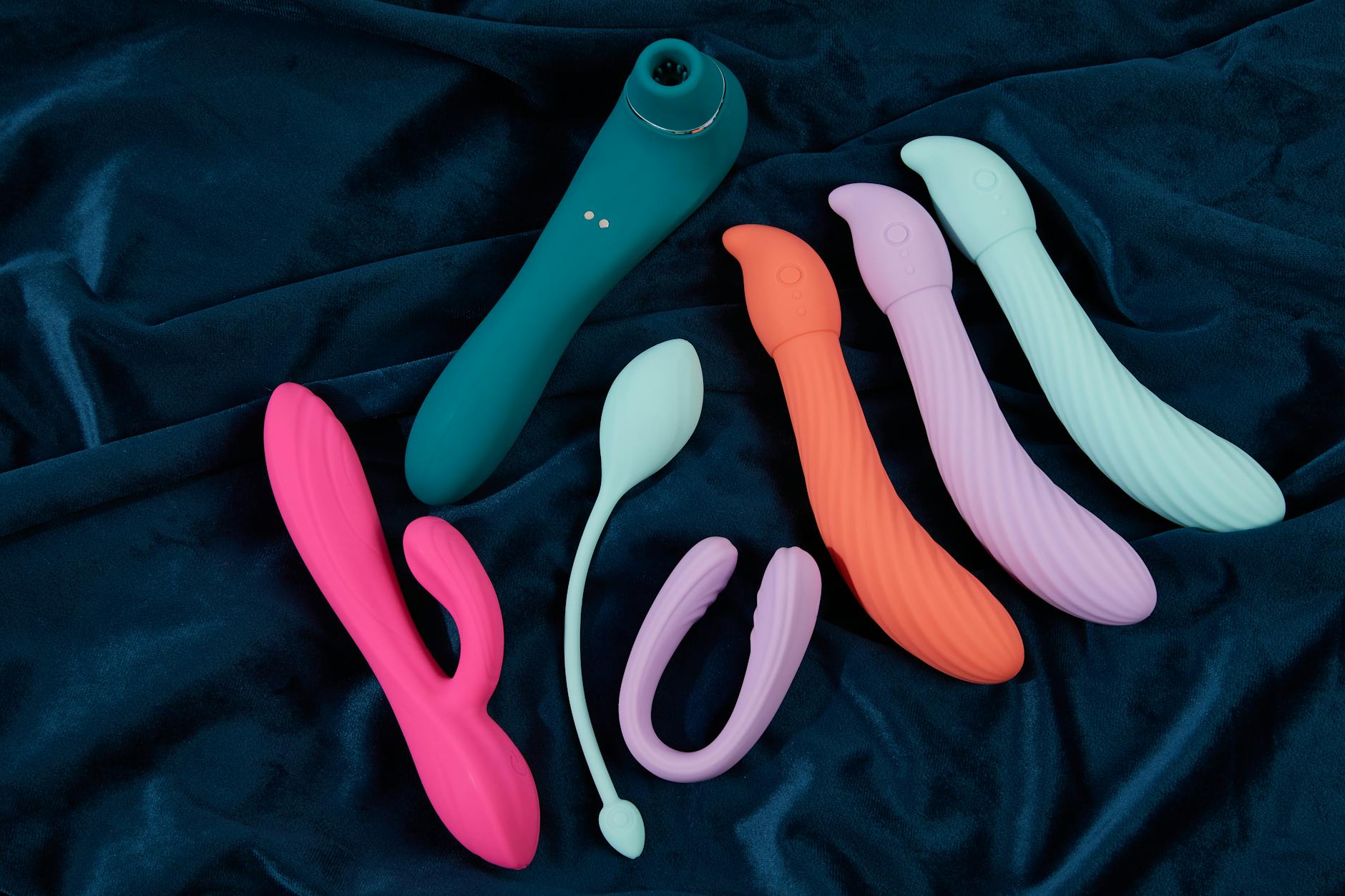
Photo by IFONNX Toys on Pexels
How to introduce a lemon vibrator during perimenopause
If you're new to lemon sucker technology, the jump feels weird. You're used to vibration. Suction feels like nothing until it suddenly feels like everything. Start here.
Week one: Solo exploration. Spend 15 minutes alone with your lemon vibrator on the lowest setting. Don't aim for orgasm. Notice where the sensation sits. Does it feel good? Too intense? Just meh? This matters because you're baseline-testing your current perimenopause sensitivity, not testing the toy.
Week two: Pattern switching. Once you've found one pattern that feels okay, try one setting higher and one pattern down. You're learning which rhythms suit your current hormonal state. Bookmark the ones that land.
Week three: Timing and lube. Add water-based lubricant (perimenopause + reduced natural lubrication is real). Apply it generously. This isn't about being broken. It's about removing friction so the suction can work cleanly. Time yourself. Notice if arousal builds faster than it used to. It often does.
Week four: Integrate with your cycle. If your period is still happening, track where you are in your cycle when different patterns feel best. You might notice that certain week, you need more intensity. Other weeks, less. Perimenopause cycles are unreliable, but your body's actual preferences often aren't.
When to use lemon vibrators in your perimenopause routine
Honestly: whenever arousal is fuzzy. The best time to pull out a lem vibrator is that middle ground where you're interested in sex but don't feel actually turned on yet. Your partner is ready, you're game, but your body hasn't caught up. Instead of waiting 20 minutes for natural arousal (which may or may not arrive), five minutes with a lemon clitoral vibrator often bridges that gap.
This is especially useful if you're in a relationship. You don't have to wait for spontaneous arousal that might not show up. You initiate touch, you use your vibrator, your body responds, and then sex happens. It's not less authentic. It's logistics.
If you're solo, the advantage is similar but different. Perimenopause can flatten desire overall. A lemon adult toy is permission to engage with your body on days when motivation is low but curiosity exists.
Partnered use during perimenopause
If you have a partner, the conversation shift is important. You're not introducing a vibrator because something is wrong. You're introducing it because your hormones have changed the timeline. That's not a failure on either side.
Have this conversation before you introduce the toy. "I've noticed arousal takes longer now, and I want to explore ways we can adapt." Then use the lemon vibrator together. Some people enjoy their partner holding it. Others prefer control. Some want foreplay with the toy first, then partnered sex after.
There's no right move. The only rule is clarity beforehand. Surprise vibrators during perimenopause when hormones are already destabilizing your sense of normalcy? That's a no.
Managing expectation shifts during perimenopause
Here's the harder part nobody talks about. Perimenopause doesn't just change physical response. It changes what orgasm feels like. Sometimes it's sharper. Sometimes it's diffuse. Sometimes it's weaker. Sometimes it's more intense than it's been in years.
A lemon vibrator can reliably get you there, but there might not be a reliable it feels like anymore. That's wild and disorienting.
The practice during this time is managing your expectations, not managing your body. Some days you'll use your lem vibrator and have an incredible experience. Other days you'll use it and feel... fine. Neutral. That's not the vibrator's fault. That's perimenopause.
Give yourself permission to stop if it's not working. Put it away. Try again tomorrow. Your body is undergoing massive biochemical change. Consistency isn't the goal. Connection is.
When to check in with a provider
If you're experiencing pain during or after use of a lemon clitoral vibrator, that's worth mentioning to your doctor. Perimenopause tissue can be more vulnerable to irritation. It's usually fixable (often with a topical estrogen cream), but you want professional eyes on it.
If desire has completely disappeared and nothing is touching it (including a lem vibrator), that's also worth a conversation. Some of that is normal perimenopause. Some of it is hormonal imbalance or depression or both. A good menopause-aware provider can sort it.
The same goes if your cycle is getting really irregular or you're having breakthrough bleeding. Those things are normal perimenopause, but your doctor should know.
FAQ: Perimenopause, pleasure, and lemon vibrators
How long does perimenopause last?
About eight to ten years on average, though it varies wildly. Some people have two years of hormonal chaos. Others have a full decade. Your body isn't following a script here. The point is that this isn't temporary discomfort you're white-knuckling through. It's a long chapter. That's why investing in tools (like a quality lemon vibrator) that work with your changing body makes sense.
Can I use a lemon vibrator every day during perimenopause?
Yes. Unlike some vibrators that can desensitize you with heavy nightly use, air-pulse lemon sexual toys don't create the same numbing effect. That said, if you're using one daily and notice sensation flattening, take a week off. Your nervous system might need a reset.
Does water-based lube reduce the sensation of a lem vibrator?
Nope. The suction technology works just as well with lube as without. In fact, during perimenopause, lube helps because it removes friction that might otherwise feel uncomfortable. The sensation is cleaner, not dulled.
Why does my lemon clitoral vibrator feel different on different days?
Because your hormones are different on different days. Your blood flow is different. Your pelvic floor tension is different. This isn't crazy. This is perimenopause. The toy is consistent. You're not. That's fine.
Should I tell my partner I'm using a lemon vibrator during perimenopause?
If you're in a committed relationship where sex is shared, yes. You don't need permission, but transparency prevents awkward surprises. If you're using it solo, that's your call entirely.
Can lemon vibrators help with vaginal dryness from perimenopause?
They don't solve dryness, but they work around it. Combined with water-based lube, a lemon clitoral vibrator bypasses the friction problem that dryness creates. If dryness is severe, ask your doctor about topical estrogen or hyaluronic acid suppositories. Then use your vibrator.
The bigger picture
Perimenopause is a body transition, not a body failure. Your hormones are in flux. Your arousal timeline has shifted. Your orgasm might feel different. None of that means pleasure is off the table.
Lemon vibrators are built for exactly this kind of change. They work with unpredictable sensation, adapt to variable arousal, and sidestep the friction problems that come with changing tissue. That's not magic. That's smart design for an intelligent transition.
If you're in perimenopause and sex has started feeling distant or difficult, a quality lemon clitoral vibrator might be the simple tool that reconnects you. Your pleasure matters during this decade just as much as it did before. You deserve tools that acknowledge the change and work with it.
Ready to explore what works for your body right now? Start with your own curiosity. Get in touch with us if you have questions about which lemon adult toy suits your current needs.
Sources
- American College of Obstetricians and Gynecologists. (2022). "Perimenopause: Endocrine Society Clinical Practice Guidelines."
- Kingsberg, S. A., & Schaffir, J. (2015). "The impact of perimenopause on sexual function and satisfaction." Journal of Sexual Medicine, 12(8), 1656-1668.
- Shifren, J. L., et al. (2008). "Transdermal testosterone treatment in women with impaired sexual function after oophorectomy." New England Journal of Medicine, 341(10), 682-688.
- Peixoto, H., & Roxo, M. (2020). "Clitoral stimulation technology and perimenopause adaptation." International Journal of Sexual Health, 32(3), 245-257.