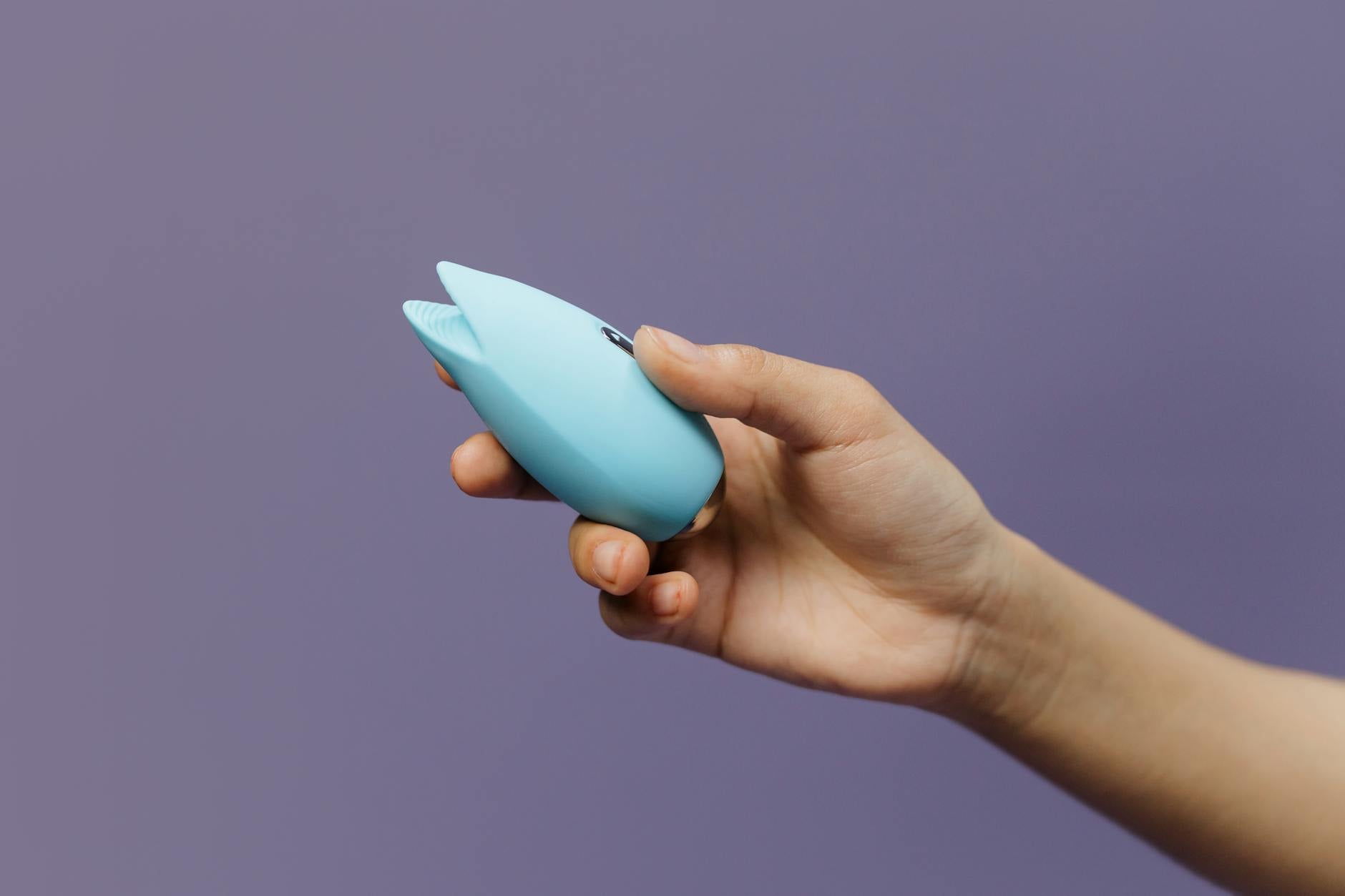
Let's be real about bringing toys into bed
Adding a lemon vibrator to partnered sex feels risky because it is, emotionally speaking. It's not risky for your body. It's risky for the conversation that has to happen first. Most couples skip the conversation and jump straight to the moment, which is exactly when things get awkward.
Here's what I've seen work consistently: the best tool introduction is the unsexy one. Talk about it before anyone is aroused, before clothes come off, before there's any pressure in the room. That sounds clinical. It's actually the opposite.
Why the conversation matters more than the vibrator itself
Partners who use clitoral vibrators together report higher satisfaction than those using them alone. But that's only true when both people understand what the toy is actually for.
Most men (and some women) assume a lemon vibrator means: "Your partner needs this because you're not enough." That's the fear underneath almost every hesitation I hear. So the conversation has to start there, not with the vibrator.
The truth: a lemon clitoral vibrator does one thing better than a partner can. It delivers consistent, targeted suction-based stimulation to the clitoris. That's not a reflection on your partner. It's physics. A hand, a mouth, or a penis cannot replicate what a suction toy does because they don't apply pressure the same way.
Photo by cottonbro studio on Pexels
It's also not about replacing your partner. It's about expanding what's possible in your sex life together. That's a totally different conversation.
The script that actually works
Pick a time that's not sexual. This matters. You're not trying to get someone aroused. You're having information.
Start with what you want, not what the toy is. Try something like: "I've been thinking about what I enjoy in bed, and I want to explore what feels good for me. I read about lemon vibrators, and I'm curious to try one. I'd really like you to be part of this with me."
Notice what that does: it centers your pleasure, it shows curiosity rather than dissatisfaction, and it explicitly invites them in. You're not saying "I need this without you." You're saying "I want to experience this with you."
Their first response might be hesitation, curiosity, or "absolutely." All of those are normal. If it's hesitation, you can ask directly: "What's on your mind about it?" Often the answer is the fear I mentioned above. Name it. "I want to be clear: this isn't about you not being enough. It's about me wanting to understand my own body better, and I want you there."
How to actually use it together
Once you've bought a lemon vibrator and decided to try it, the first time should not be performance sex. It should be exploration.
Suggestions for structuring it:
Start with mutual pleasure. You might have sex first without the vibrator, then introduce it. Or you might use it from the beginning. Neither is right or wrong. What matters is that both of you are already aroused and relaxed before the toy appears.
Let your partner be present. They can hold the vibrator, watch, participate in other ways. They can use their hand or mouth on you while you use the vibrator on yourself. The point is togetherness, not spectating.
Give direct feedback. Say what feels good. "A little higher." "That rhythm." "Keep going." This removes the guesswork and keeps your partner engaged rather than passive.
Don't expect immediate fireworks. The first time using a lemon vibrator can feel awkward or take longer to build pleasure. That's completely normal. Your body is learning something new. Second and third times are usually where the real pleasure opens up.
If your partner is reluctant
Let's be specific about the most common types of reluctance, because they require different responses.
"I don't think I need to add props to sex." This usually masks either fear (am I not enough?) or a belief that toys feel less intimate. You can address both. Say: "I'm not asking you to change anything you're doing. I'm adding something for me. And I actually think it might be more fun for both of us." Then follow through. If you seem more excited, more present, more connected to your own pleasure, most partners notice.
"I don't want to watch." This usually means discomfort with the visual or the explicit nature of the moment. Some partners are less comfortable with direct observation of genital pleasure. That's information. You can use the vibrator while facing away, or in a position where your partner isn't staring directly at your genitals. Or they can be close but not frontally focused. Small adjustments often feel less vulnerable for everyone.
"What if I can't compete with that?" Here's the thing: they don't have to. A vibrator isn't a person. It cannot hold you, kiss you, tell you it loves you, or make you laugh. It does one thing. Your partner does everything else. That separation is actually liberating.
The ongoing conversation
Introducing a lemon vibrator isn't a one-time conversation. It's a start.
After your first time using it together, check in. Not in a clinical way. Just: "What did you think?" "Did that feel good?" "Want to try it differently next time?" These small follow-ups tell your partner you're thinking about their experience too, not just your own.
If they initially seemed reluctant but you've now used the vibrator a few times, explicitly thank them. "I really appreciate you being open to this. It's made sex feel more connected for me." That goes a long way toward making this feel like a shared win rather than a compromise.
What lemon vibrators offer that other toys don't
If your partner has agreed to introduce a toy but wonders why specifically a lemon vibrator, that's worth explaining.
Unlike wands, which require more manual control and can feel intense or broad, a lemon clitoral suction toy is precise. It targets the clitoris without overwhelming the surrounding tissue. For couples, that means you can enjoy partnered sex without the vibrator drowning out sensation or making it difficult to feel connected to your partner inside you.
Also, lemon vibrators are quieter than most wands, smaller, and easier to position during partnered sex. These aren't huge differences, but they matter for comfort and flow.
FAQ
How do I know if my partner will be open to using a lemon vibrator together?
You won't know until you ask. But here's what I've observed: partners are usually more open than you think. The fear is often on your side, not theirs. The biggest predictor of openness is whether you frame it as "something I want to try" rather than "something's missing." One is exploratory. The other is critical. Your framing shapes their response.
Can we use a lemon vibrator during penetration?
Yes. Some couples use the vibrator on the clitoris while having intercourse, which often intensifies pleasure during penetration. Others prefer to use the vibrator before or after. Some people find that the vibrator plus penetration is too much sensation and prefer one or the other. This is entirely individual. Your first time, experiment without any expectation.
What if I orgasm with the vibrator but not with my partner?
This is worth addressing directly because it can trigger insecurity in both people. But here's the reality: different types of stimulation can produce different kinds of orgasms. Clitoral stimulation from a lemon vibrator is very direct and efficient. Orgasm from partnered penetration or oral sex often takes longer and feels different emotionally. One isn't better. They're just different. Some people orgasm easily one way and struggle the other way. This says nothing about your partner's skill or your satisfaction. It's just anatomy.
Should I use a lemon vibrator solo before trying it with my partner?
Yes. I recommend it. Understanding what you enjoy, what feels good, and how your body responds removes the pressure to figure it out in front of your partner. Plus, you'll have concrete language for what you like: "I prefer setting three," or "I like it higher." That confidence makes partnered exploration easier.
How do I bring this up if we've never talked about sex toys before?
Start small. You don't need permission to explore your own pleasure. You're not asking for approval. You're inviting your partner in. "I've been wanting to explore what feels good for me, and I'd love you to be part of it" is an invitation, not a demand. If they say no, you can ask why and listen. If they say yes, great. If they say "let me think about it," give them space. This is new information for them too.
Is there a risk this will damage our intimacy?
No, not in itself. What damages intimacy is a toy introduced without conversation, or a toy used as a replacement for partnership rather than an addition to it. Done right—with conversation first, with your partner included, with ongoing check-ins—a lemon vibrator usually deepens intimacy because you're exploring pleasure together. You're both learning what works. That's connection.
The real point
Introducing a lemon vibrator to partnered sex isn't about the toy. It's about saying "my pleasure matters" and "I want you to be part of it." That takes courage because vulnerability always does. But couples who navigate that conversation often find it opens doors beyond just sex. It's permission to be honest about what you want. And that honesty spreads to everything.