
Pleasure doesn't disappear when grief arrives. It just goes quiet.
Losing a long-term partner reshapes everything about how you experience intimacy. The physical absence is obvious. What surprises people is how the desire itself transforms. Sometimes it vanishes entirely. Sometimes it's still there, but now it feels complicated. Guilt-edged. Like wanting pleasure is somehow unfaithful to the memory of what you had together.
Here's what I've learned from working with people in this exact position: reconnecting with your own pleasure isn't moving on from your partner. It's an act of self-preservation.
Why grief mutes desire in the first place
When you've been intimate with the same person for years or decades, pleasure becomes wired to that relationship. Your body learned their touch, their rhythm, their presence. When that person is gone, your nervous system doesn't just miss them. It's genuinely confused about how desire works anymore.
Add in the neurological reality of grief. Grief activates the same brain regions that process pain. Your prefrontal cortex (the part that handles rational thinking) goes quiet while your amygdala (fear and threat response) gets louder. That's why grief makes everything feel heavier. Your brain is literally running a threat-response program.
The guilt piece is equally real. Many people report feeling like wanting pleasure is a betrayal. Like orgasm means you're moving on too quickly. Like enjoying your own body somehow erases what you had. It doesn't, but the feeling is so powerful it can shut desire down completely.
Starting from where you actually are
You don't rebuild pleasure by forcing it. You rebuild it by listening to what your body is actually asking for right now.
For some people, that means starting with nonsexual touch. Massage, warm baths, spending time in your body without the goal of orgasm. Your nervous system needs to remember that touch can feel good for its own sake, without the weight of shared history attached.
For others, pleasure comes back through solitude first. There's no one watching. No one's needs to manage. No one to worry about disappointing. That freedom can be revelatory. You get to figure out what you actually want, separate from what your partnership required.
Lemon clitoral vibrators are useful precisely because they're completely yours. The Lem or other lemon sexual toys require nothing but your own consent. There's no performance anxiety because there's no audience. There's no negotiation. There's no reminder of someone who isn't there anymore. It's just you, sensation, and the gradual return of desire on your own terms.
How clitoral vibrators specifically help the grieving body
Three things happen when you start using lemon vibrators after partner loss.
First, they interrupt the pattern. Your body learned desire as part of a couple. A vibrator is a deliberate break from that pattern. It's not a replacement for your partner. It's something entirely new. That novelty helps your nervous system reset.
Second, they require intentionality. You have to choose to use it. You have to set aside time. You have to be present with yourself. That intentional choice is powerful. It's not something that happens to you. It's something you're actively choosing for yourself.
Third, they make pleasure achievable on grief's timeline. When arousal is slow to build. When your attention keeps drifting to loss. When tears show up uninvited during moments that should feel good. A lemon clitoral vibrator gives you a tool that works regardless. You don't have to be at peak arousal. You don't have to have perfect focus. You just have to be willing.
The permission piece matters as much as the tool
I work with a lot of people who describe picking up a lemon sucker or clitoral vibrator for the first time after loss and just crying. Not from pleasure. From the realization that they were allowed to. That their own body could still be a source of joy. That wanting to feel good wasn't disrespectful to the person they lost.
This is where grief work and pleasure work overlap. You have to grieve the relationship that's gone. And you also have to slowly, carefully, without rushing, claim back your own body as a source of comfort and sensation.
The timeline is different for everyone. Some people find their way back to pleasure within months. Others take years. There's no right speed. But I've never met someone whose nervous system didn't eventually soften toward the possibility of feeling good again.
Practical steps to reconnect slowly
If you're thinking about using a lemon vibrator after loss, here's what I usually suggest.
Start with the lowest setting. Not because high intensity is bad. But because you're literally rewiring a neural pathway. Your body doesn't remember this sensation without your partner present. Low intensity lets you register pleasure without overwhelming your grief response.
Set a time when you're not exhausted or flooded with sadness. That might sound obvious, but most people skip it. They think they should use a moment when they're feeling okay anyway. Actually, the opposite works better. Pick a time when you're stable enough to focus, even if you're not happy.
Give yourself permission to stop anytime. You might start and realize it's too much. Or the sadness is too close. Or you just don't want to. That's not failure. That's your nervous system communicating. Respect it. You can try again whenever feels right.
Consider whether you want to use lemon vibrators alone or with a new partner eventually. Both are fine. Solo use is legitimate and powerful. But some people find that eventually sharing pleasure with someone new becomes part of their healing story. Neither choice is the goal. Both are just different paths forward.
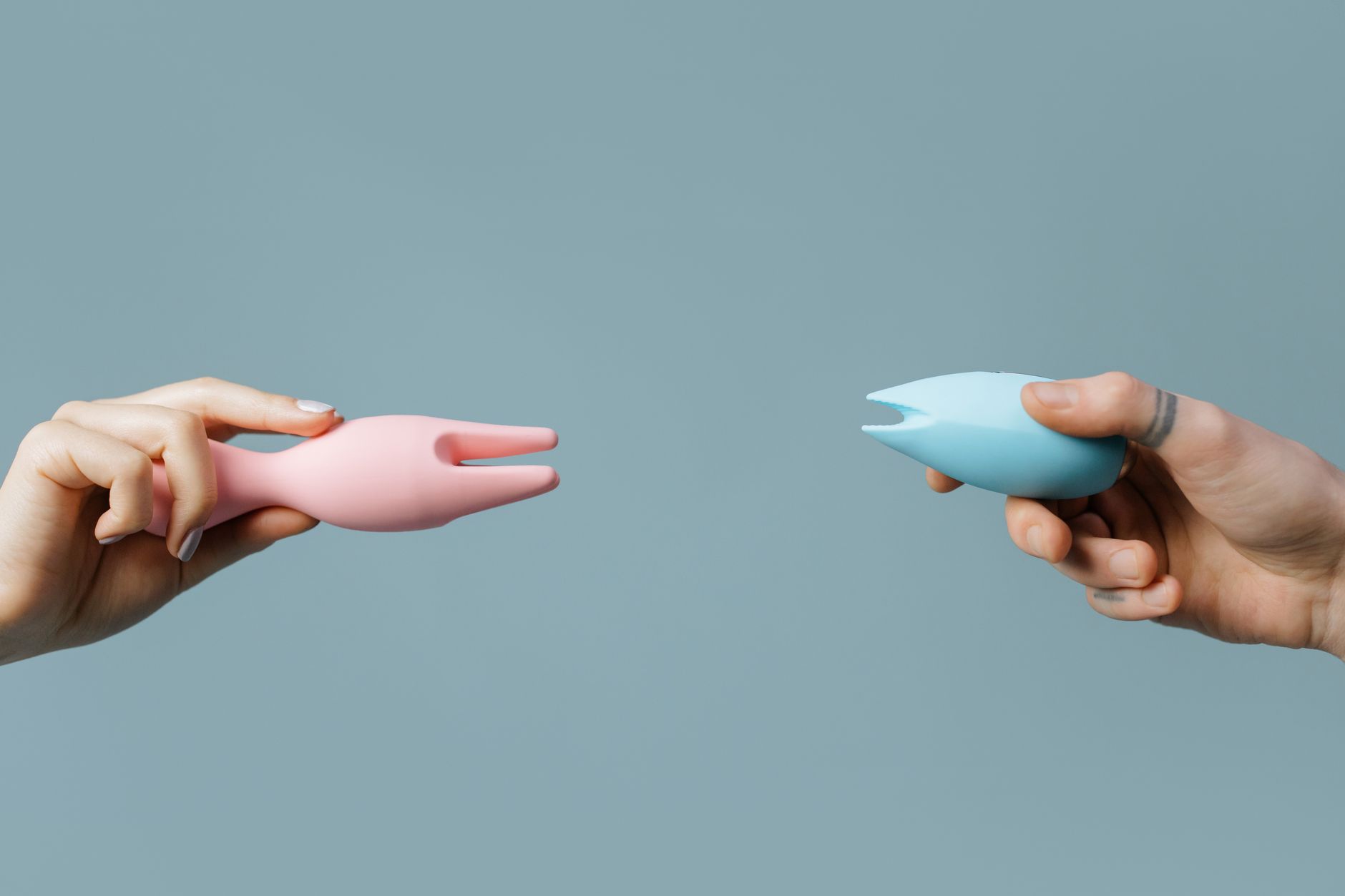 Photo by cottonbro studio on Pexels
When guilt and grief tangle together
One thing I want to be direct about: the guilt you might feel using a vibrator after losing your partner is grief pretending to be morality. It's not immoral to want pleasure. It's not a betrayal. It's you, learning to live in a body that's still here, still capable of feeling good.
You're not replacing your partner with a lemon clitoral vibrator. You're not erasing what you had. You're just slowly, carefully, beginning to reclaim parts of yourself that grief temporarily locked away.
If that guilt is intense and persistent, therapy helps. A grief counselor or sex therapist can help you untangle the legitimate sadness from the internalized shame that sometimes hides inside it. They're different things.
Rebuilding isn't betrayal. It's survival.
Your long-term partner would likely want you to feel good. To experience pleasure. To know that your body is still capable of joy. That's not assumption. That's decades of people telling me that their partners, if they could speak, would absolutely want that for them.
Lemon vibrators become a bridge. From grief toward living. From isolated sensation toward joy. From a body that feels broken toward a body that's learning to feel again.
Start whenever you're ready. Start slow. Start alone. Start with permission. That's all that matters.
People also ask
Is it normal to feel guilty about using a vibrator after losing my partner?
Completely normal. You spent years or decades connecting pleasure with that specific person. When they're gone, pleasure feels like it belongs to them, not to you. That's not actually true, but the feeling is real. Guilt after loss is your nervous system trying to stay loyal to someone you loved. It's a sign of how much they mattered, not a sign that wanting pleasure is wrong. Over time, most people gradually separate the guilt from the actual choice, and the choice becomes easier.
How long should I wait after losing my partner before using a lemon vibrator?
There's no required timeline. Some people feel ready after a few months. Others need years. Your grief isn't moving too slowly if you're still not interested in pleasure a year or two out. Your nervous system is just still reorganizing. When you do feel even a small spark of curiosity or willingness, that's enough to start. You don't have to feel healed first.
Can using a vibrator after loss feel like I'm moving on too quickly?
That fear is really common, and it deserves to be taken seriously. But here's the thing: pleasure and grief exist simultaneously. You can feel both at the same time. Using a lemon clitoral vibrator doesn't mean you've forgotten your partner or stopped missing them. It means your body is learning to exist in a world where they're gone. That's not disrespect. That's the slow work of staying alive.
Should I be worried if arousal feels different or harder to access than it was before?
Not at all. Your body went through something massive. Desire comes back slowly, often differently than it was. That's neurologically normal. Your brain has to relearn arousal without the partner who was part of that pattern. It usually comes back, but it might feel less automatic or more fragile for a while. That fragility isn't permanent. It's just part of the healing process.
Is it better to grieve alone or eventually find pleasure with a new partner?
Both are legitimate paths. Some people find reconnecting with their own body solo is the foundation they need before they're ready to be intimate with someone new. Others find that sharing pleasure with a new partner eventually becomes part of how they heal. There's no hierarchy. Healing alone is complete healing. Healing with someone is also complete healing. You get to choose your own timeline and your own path.
What if I use a vibrator and it brings up more sadness instead of pleasure?
That happens more often than people admit. Sometimes touching yourself reminds you of all the ways your partner used to touch you. Sometimes an orgasm unlocks grief that was sitting just below the surface. That's not a sign to stop. It's a sign that your body is processing. If it becomes overwhelming, pause and give yourself space. Grief work is its own form of healing, even when it shows up during moments meant for pleasure.