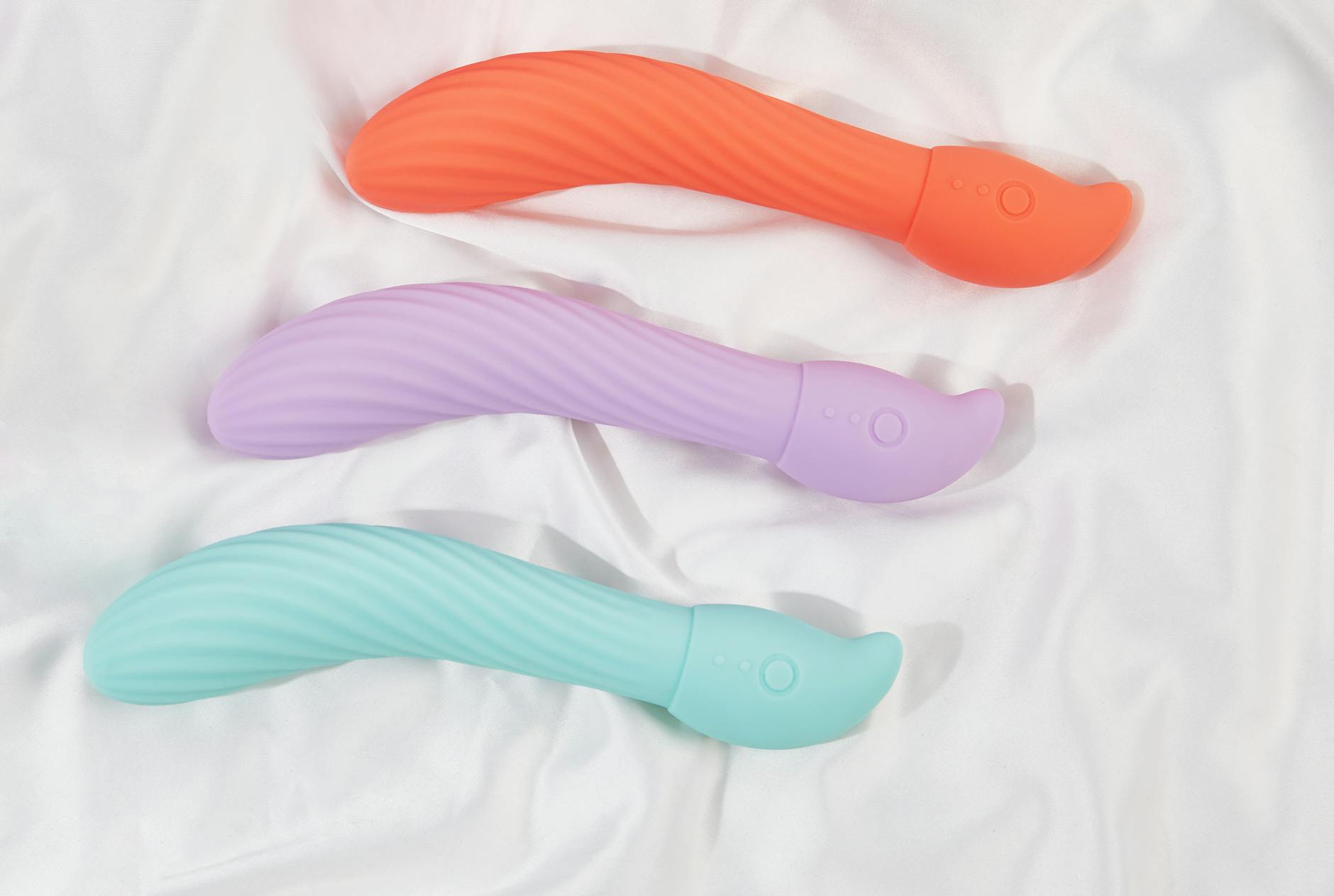
Can you use lemon vibrators during menopause? Absolutely—and often better than you'd expect.
Menopause changes physical sensation. It doesn't erase it. The tissue thinning and lubrication shifts that come with dropping estrogen do affect how lemon clitoral vibrators feel on your body. But here's the thing most articles skip: those changes can actually make lemon vibrators a smarter choice than wands or other toys during this life phase.
What menopause actually changes about sensation
Estrogen is the scaffolding that keeps vaginal and vulval tissue thick, elastic, and well-lubricated. When it drops, that tissue gets thinner—which sounds like bad news but is more nuanced than that.
Thinner tissue is more sensitive to direct friction. A powerful wand that felt amazing at 35 might feel harsh or overwhelming at 55. Conversely, lemon clitoral vibrators work with suction and gentle pulse patterns instead of vibration-only intensity. The Lem vibrator and similar designs create a gentle seal that stimulates without the aggressive friction that can irritate delicate tissue.
The clitoral nerve density doesn't change. Your capacity to orgasm doesn't change. What changes is the pathway there. Estrogen drop also affects blood flow slightly, so arousal might take 15 to 25 minutes to build instead of 5 to 10. That's not a problem. That's information. Budget the time, adjust expectations, and you're fine.
There's also testosterone—yes, people with vulvas produce it too, and it's crucial for desire. Testosterone drops harder and faster during menopause than estrogen does for some people. If desire tanked, that's worth a conversation with your doctor. If sensation shifted but desire stayed, you're in the majority.
Why lemon vibrators are often better than other options post-menopause
The suction mechanism in lemon sexual toys creates stimulation without requiring the same mechanical pressure as wand vibrators. You're not dragging a vibrating head across tissue. You're creating a gentle, rhythmic pull that engages the nerve endings without friction-based intensity.
This matters because menopausal vulvas often feel better with lower-pressure stimulation during the early warm-up phase. A lemon clitoral vibrator lets you start at settings 1 or 2 and build gradually without overshooting into discomfort. Wands tend to be all-or-nothing: they're either too intense or not intense enough.
Lemon adult toys also tend to be quieter and have longer battery life than comparably powerful vibrators, which means less urgency and more room for pleasure to unfold at its own pace.
The practical adjustments that make a real difference
Here are the changes I actually recommend to clients using lemon vibrators during menopause.
Start with lubrication, always. Water-based lube is your friend. Hyaluronic acid-based lubes designed for menopausal bodies exist and are excellent—they mimic the body's natural moisture more closely than basic water-based options. Apply generously. You're not being excessive. You're matching what your body used to do automatically.
Warm up longer. Set aside 20 to 30 minutes. The first 10 to 15 minutes might be external stimulation only—your Lem on the lowest settings, exploring what feels good today. Don't rush penetration or deeper sensation if it doesn't feel right. Pleasure is the goal, not completion.
Use lower intensity early. Most lemon vibrators have multiple settings. Start at 1 or 2 even if you used to go straight to 4 or 5. Your nervous system will tell you when to increase. Listen to it.
Pay attention to positioning. Thinner tissue means certain angles feel better than others. Experiment with reclined versus upright, with your hips at different tilts. What works changes sometimes week to week depending on hormonal fluctuations and overall stress.
Consider a break if you're sore. If tissues feel irritated afterward, skip the next day and try again with more lube and lower intensity. This isn't permanent. It's adjustment.
The emotional layer that nobody talks about
Here's what I see in my practice: menopause lands on top of other life stuff. Your body is changing, your skin is changing, your sleep is erratic, maybe your relationship is shifting too. The cultural message is that your sexual prime is over. It's not. But the noise makes it hard to feel that.
The invitation here is to separate two conversations. One is physiological: my body is responding differently, and here's what helps. The other is psychological: I'm grieving something, or I'm anxious, or I'm angry at my partner. Both are real. Neither causes the other, but they interact.
If you're using a lemon vibrator alone, menopause can feel like liberation—no contraception worry, no fertility timeline, just sensation for its own sake. Many of my clients report that their most intense and longest orgasms happen post-menopause. This is not anecdotal comfort. It's clinical reality.
If you're with a partner, the vulnerability here is talking about what's different without making it about desirability. "I need more time and more lube" is not a referendum on your partner's attractiveness. It's a logistical fact. Partners who can hear it as logistical—instead of as criticism—usually find that intimacy deepens.
When to check in with a doctor
If penetration is painful even with lube and warm-up, see your gynecologist. Genitourinary syndrome of menopause (GSM) is treatable, often with topical estrogen. If you're experiencing total numbness—like lemon vibrators feel like nothing—that's less common but worth investigating. If desire has completely flatlined, that's a conversation too.
One thing: your doctor might assume you don't care about pleasure anymore. You might need to be explicit. "I want to maintain sexual pleasure during menopause" is a totally reasonable health goal and a conversation worth having.
The plot twist: why many people have better experiences post-menopause
Three reasons come up again and again in my practice.
First, clarity. The hormonal cycling stops. The monthly mood swings, the fertility awareness, the societal pressure to perform in a particular way—it lifts. You can actually feel what you feel, instead of filtering it through hormonal noise.
Second, permission. For the first time, many women stop performing pleasure for a partner and explore what actually feels good for them. That shift alone transforms the experience.
Third, practice. You've had decades to learn your body. You know what works and what doesn't. You're less likely to fake it, more likely to ask for what you want, and far less interested in sex that doesn't feel good. That's not a compromise. That's mastery.
FAQ: Common questions about lemon vibrators and menopause
Will using a lemon vibrator during menopause make my sensation worse or cause numbness?
No. Using a lemon clitoral vibrator won't damage sensation or cause long-term numbness. Menopause itself reduces sensation temporarily because of tissue changes and estrogen drop, but that's independent of toy use. If anything, regular pleasure—with lube and appropriate intensity—supports blood flow and tissue health. The numbness concern is a myth. What's real is that sensation changes and sometimes takes longer to activate. That's different.
How often can I safely use a lemon vibrator during menopause?
Daily is fine if you want it. There's no limit on lemon toy use as long as tissue feels okay afterward. If you're sore or irritated, take a day off and use more lube next time. Most of my clients find a rhythm organically—3 to 5 times a week feels right—but there's no rule. Your body will tell you.
Is water-based lube safe with a lemon vibrator?
Yes, absolutely. Water-based lube is actually preferable because silicone lube can degrade silicone toys over time. Make sure your lube is body-safe (paraben-free, glycerin-free is often better during menopause since glycerin can feel sticky) and reapply as needed during use. Lube is not optional during menopause. It's a tool.
Can I use my lemon vibrator with a partner during menopause?
Completely. Some partners feel threatened by toys. Some feel excited. Either way, a lemon vibrator can enhance partnered sex if you're both interested. Start the conversation beforehand, not mid-session. Talk about what you want to explore and what feels good. If your partner is receptive, they can also apply lube, control the settings, or combine toy stimulation with their own touch. Communication matters more than the toy.
Does menopause make lemon vibrators feel more or less intense?
It can go either way. For some people, thinner tissue means sensation feels more acute—lower settings feel more noticeable. For others, reduced blood flow means sensation is duller initially, then peaks as arousal builds. This is individual. Start conservatively and adjust based on what your body tells you that day. Intensity is contextual during menopause.
Can I use a lemon vibrator if I'm on hormone replacement therapy (HRT)?
Yes. HRT doesn't change how lemon toys work, and toys don't interfere with HRT. If you're on HRT, tissue thickness might improve, which could mean you tolerate higher settings. But the principles stay the same: lube, warm-up time, and tuning in to what feels good. HRT is one tool. A lemon clitoral vibrator is another. They work together.
The real truth about pleasure and menopause
Menopause is not an ending. It's a recalibration. Your lemon vibrator isn't going to stop working. Your body isn't going to stop responding. What changes is the pacing, the lubrication, maybe the intensity preference. Those are adjustments, not defeats.
The women who report the most satisfaction during menopause tend to have one thing in common: they're willing to get curious about what feels good now, instead of trying to recreate what felt good before. A lemon clitoral vibrator is an excellent tool for that curiosity. It's gentle enough for thinner tissue, effective enough to deliver real sensation, and intuitive enough that you can explore at your own pace.
You deserve pleasure during menopause. Not in spite of it. During it. That's not wishful thinking. That's your nervous system's actual capacity, backed by decades of clinical observation. If you want to explore whether <a href="/blog/lemon-vibrators-after-40-how-to-reclaim-pleasure-later-in-life">lemon vibrators work for your age and body type</a>, or how to <a href="/blog/how-to-use-lemon-vibrators-for-maximum-pleasure-beginners-guide">use them for maximum pleasure</a>, those guides dig deeper into specific scenarios. For now, know this: your body during menopause is not broken. It's different. And different can be really, really good.